
Monthly Archives :

November 2024

Best Time to Send a Job Application Email to Recruiters

When is the Best Time to Send a Job Application Email to Recruiters? A Simple Guide!

When is the Best Time to Send a Job Application Email to Recruiters? A Simple Guide! 800 500 HRSG

Every job seeker at one time or another wonders exactly when is the best time to send a job application email to a recruiter. Most aspirants who have mastered the art of resume and cover letter creation, as well as job application email writing, still can’t land a job. So, there must be something they are not doing right. In most cases, it has to do with the wrong timing on which they send these emails.

If you are facing a similar issue then don’t worry because this blog will show you the right time at which you can send a job application email and expect to get the best results.

So, without any further ado, let’s jump right ahead and see when you should send a job application email to your recruiters or potential employers.

  • Why is Timing So Important?
  • Factors That Can Affect the Best Time to Send a Job Application Email
  • Sending a Job Application Email: Based on the Day of the Week
  • Sending a Job Application Email: Based on the Time of the Day
  • Additional Tips for Sending a Successful Job Application Email

Why is Timing So Important?

Every business uses different recruitment and selection strategies and to make sure you have a better chance at landing a job you need to tailor both your email’s content as well as the time to send accordingly.

With the right timing, you can quickly and more effectively get under the radar of the hiring managers. If you send your application at a time when the recruiter is most likely to open their inbox, it can prompt them to click on your email on the go which increases your likelihood of landing a job interview.
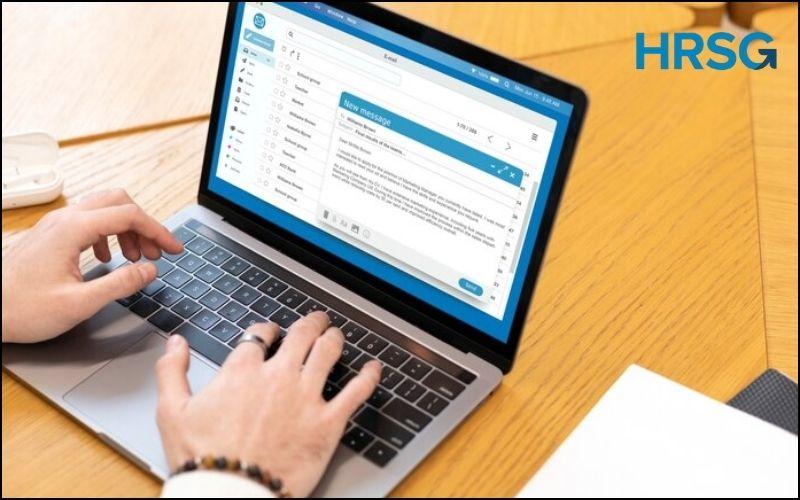
job application mail send

Factors That Can Affect the Best Time to Send a Job Application Email

Following are a few factors that can influence the time when you need to send the email: 

    • The first thing that can influence the timing is the type of industry you are hoping to get into.
    • The size of the company is another factor. Larger corporations have different working hours as well as email checking habits as compared to SMEs.
    • Businesses that have roles that need urgent hiring have quicker responses than those with prolonged hiring needs or processes.
    • Another factor is the beginning of the fiscal year for the company or the region. This is the time when budgets are set and the momentum starts to build up on newer projects which increases your chances of landing a job that you want.

Sending a Job Application Email: Based on the Day of the Week

Mentioned below is the right time to send a job application email based on the day of the week which guarantees more career opportunities.

  • Monday & Tuesday

The start of the workweek is the time when the recruiters are generally more fresh, focused, and motivated. These are the best days to send the job application emails as it gives you more chances of being read and considered by the recruiter.

  • Wednesday

The mid of the week is also a good time but it isn’t as effective as Mondays or Tuesdays. Most recruiters are done considering new candidates by this time which leaves very little room for you. But if you missed the previous two days then you can send the email on Wednesday and expect to get positive results.

  • Thursday & Friday

These are the days when recruiters are winding down and getting ready for the weekend. They have to catch up on other important tasks which prevents them from opening up their inboxes. So, it is better to avoid sending emails during these days.

  • Saturday and Sunday

Every expert recruiter recommends not sending any job applications on the weekend. Emails sent during these days are more likely to get buried under other applications or other work emails which wastes both your time and energy.

job application mail

Sending a Job Application Email: Based on the Time of the Day

Different businesses have different hiring policies as well as HR priorities. This can also affect the time of the day when you can send the email and get the best results.

  • 6 AM – 9 AM

Sending an email during these hours guarantees more success rates. The emails sent during this time are more likely to get opened and read by the recruiters.

  • 9 AM – 11 AM

These are also effective times of the day to send emails as by now the recruiters have settled down in their offices and are ready to do their day’s work of going through job application emails.

  • 12 PM – 3 PM

Early afternoon is a slightly less effective time to send an email. The hiring manager might get busy in meetings or other management tasks during these hours which reduces the chances of your email getting read.

  • 3 PM – 6 PM

After 3 PM these recruiters are mostly getting done for the day. They are in the process of finalizing application screening and have no time to consider newer emails  

Conclusion

Finding a job that you have been dreaming about for years has its challenges. Even when you find an opening in some company, you still have to proceed with utmost caution and strategic planning to make sure you stand out in the eyes of the recruiters.

One simple way to do that is by sending the job application email at the proper time. Choosing the right day as well as the time of day to send the email can help you increase your chances of landing that job interview.

You can take this opportunity to stand out among other candidates which is sometimes all you need to convince the recruiter that you are the right person for the job.


Emiratisation in UAE 2024

Emiratisation in UAE 2025: Laws, Regulations, & Fines

Emiratisation in UAE 2025: Laws, Regulations, & Fines 800 500 HRSG

If you are a business operating in the UAE then you might already have some idea about Emiratization and its impacts. And if you don’t then don’t worry because this is what this blog is all about. 

Emiratisation is basically a policy in the UAE that aims to create more job opportunities for local Emirati citizens both in the public and private sectors.

As of July 2024, the UAE authorities have started the evaluation of companies from the private sector to make sure they are meeting the Emiratization targets for the year.

Businesses failing to meet the targets will have to pay hefty fines and that is why you need to stay on top of the latest Emiratization rules and regulations to be on the safe side.

  • Emiratization: An Overview
  • Objectives of Emiratization
  • Emiratization Laws and Regulations
  • Employment Quotas
  • Training and Development
  • Salary and Benefits
  • Emiratization Point Systems and Tiers
  • Reporting and Compliance Obligations
  • Key Changes in The Emiratization Law in 2024
  • Increased Scope
  • Diverse Economic Sectors
  • Salary Threshold
  • Education and Certification Requirements
  • Fines or Penalties for Non-Compliance

Emiratization: An Overview

The UAE is a region with a booming economy and unparalleled infrastructure. So, naturally, millions of expatriate workers and businessmen are attracted to the place every year.

This great inflow of expats over time started to dominate the workforce leaving very few jobs for the locals. By 2004, there were about 80% expatriates in the UAE workforce. The percentage went up to 99.57% in 2009 in just 5 years. This meant out of 3 million private sector employees only 13,000 were Emiratis.

This situation urged the UAE government to create a robust policy that will prevent the isolation of local citizens in the private sector. This initiative is called Emiratisation which aims to generate more career opportunities for Emiratis in the public and private sectors so that they too can play their part in the economy and reap the benefits as well.

The UAE’s Ministry of Human Resources and Emiratisation (MoHRE) is responsible for monitoring and enforcing the Emiratisation implementation. 

emirati people

Objectives of Emiratization

The following are the main objectives of the Emiratisation program:

  1. Make sure the number of local Emiratis increases in the workforce.
  2. Decrease the complete dependency on expatriates across all major sectors.
  3. To make sure the Emiratis get opportunities to develop skills and do meaningful work.
  4. Make sure the Emiratis can play their part in the country’s growing economy.
  5. To create a workforce that is more diverse and balanced so that a single group or nationality doesn’t dominate a particular sector.

Emiratization Laws and Regulations

According to the law of Emiratisation in UAE, all private sector businesses that have a workforce comprising at least 50 people must increase their Emirati workforce by 1% over the last six months.

Moreover, these companies need to increase their Emirati workforce by 2% each year leading to a total of 10% increase by 2026.  The main goal here is to add more local talent to the workforce. However, the Emiratisation rules are not the same for all sectors and there are certain variations that you need to take into account.

Following are some general Emiratisation laws and regulations that every business operating in the UAE needs to follow

  • Employment Quotas

Every business is required to meet the required quota target to ensure compliance. The UAE authorities state that businesses with 50 or more employees need to increase their Emirati workforce by 2% every year.  

Following employment quotas have been set under Emiratisation law for the locals in the region:

  1. At least one Emirati worker if your workforce comprises 50 skilled individuals.
  2.  At least two Emirati workers if your workforce comprises 51-100 skilled individuals.
  3. At least three Emirati workers if your workforce comprises 101-150 skilled individuals.
  4. At least one Emirati worker for every 50 skilled workers if your business has more than 150 professionals.
  • Training and Development

Companies must train Emirati employees and help them develop both soft and hard skills. Companies are encouraged to use the Nafis platform to hire or train locals and to offer them necessary support and incentives. This is done to enhance the competitiveness of the locals in the UAE job market.

  • Salary and Benefits

Emirati workers will be offered competitive salaries where the lowest amount should not be below AED 4000. Other benefits like transportation, health insurance, and housing allowance should also be provided.

  • Emiratization Point Systems and Tiers

There is a point-and-tier system to encourage more private companies to hire and train Emiratis. As these companies hire more locals, they get higher tiers and more points.

These companies can then redeem these points for incentives like sponsorships as well as fewer government fees.

  • Reporting and Compliance Obligations

The companies must provide their Emirati employees with appropriate workplaces as well as equipment along with the necessary training.

Moreover, they need to

  • Acquire a work permit for the Emirati employee from MoHRE
  • Finalize the Emirati employment contract of the candidate
  • Pay salaries per the WPS (Wages Protection System)
  • Register the Emirati employees in pensions as well as social security systems. They need to do so within a month of the issuance of their work permit.
  • Report all amendments to the employee contract that might affect the Nafis program eligibility requirements.

Key Changes in The Emiratisation Law in 2024

Here are a few significant changes that were suggested and approved in the Emiratisation law in 2024:

  • Increased Scope

In 2024, the MoHRE has expanded the scope and number of companies that must comply with Emiratisation law. Now almost 12,000-20,000 companies from the 14 specific sectors with 20-49 employees must hire at least one Emirati by the end of 2024 and two by the end of 2025. This is significant as previously companies with 50 or more employees were only subjected to this law.

  • Diverse Economic Sectors

The criteria of the policy were revised for 14 sectors in 2024. All the companies from these sectors must add 2% Emirati workers to their operations every year.

These sectors include:

  1. Transportation and warehousing
  2. Real estate activities
  3. Professional, scientific, and technical activities
  4. Administrative and support services
  5. Services 
  6. Education
  7. Healthcare and social work activities
  8. Manufacturing
  9. Construction
  10. Arts and Entertainment
  11. Mining and quarrying industry
  12. Wholesale and retail trade
  13. Financial and insurance activities
  14. Hospitality
  15. Information and communications 
  • Salary Threshold

Every skilled Emirati worker must be paid a minimum of AED 4,000 per month.

  • Education and Certification Requirements

The worker must have at least a secondary school certification or some higher qualification to become eligible for the jobs. They also need to have their qualifications and certifications attested by the relevant authorities.

Emiratisation in UAE emirati girl working

Fines or Penalties for Non-Compliance

The UAE government plans to strictly implement Emiratisation and if a company is found guilty of non-compliance it will have to face serious repercussions.

  • If a company with a workforce of 50+ shows non-compliance they will be fined AED 8,000 in 2024 and AED 9,000 in 2025 every month.
  • If fines are not paid in full the company’s work permits may be suspended.
  • Company demotion to the third category is another consequence of non-compliance which will create several issues down the line.
  • There is a fake Emiratisation fine of AED 20,000 to AED 100,000 for each employee who engages in the fake Emiratisation program.

Conclusion

As a private company operating in the UAE adhering to the Emiratization laws and meeting all the targets can lead to several benefits. It makes such businesses eligible for government incentives like grants or subsidies. Moreover, you are also given preferential treatment when it comes to government projects or contracts if you follow Emiratization guidelines.

On the other hand, failure to show compliance can lead to fines, operational restrictions, as well as potential legal suits.

This is why it should be your top priority to learn more about the latest Emiratization requirements to be on the safe side.

And if you need assistance in your HR operations or you need someone to help you navigate the complexities of the Emiratization rules then you can rely on HRSG. Our cloud-based HRMS platform (Octofy) offers a comprehensive suite of services to streamline and enhance business operations. From AI-powered HR and payroll solutions to tailored talent consulting and rewards strategies, Octofy optimizes workforce and financial management. With additional services in financial accounting and outsourcing, businesses gain reliable support in compliance, efficiency, and operational performance.

Image Enquiry