Monthly Archives :

January 2025

Tax Registration Number UAE

Tax Registration Number UAE: Everything You Need to Know

Tax Registration Number UAE: Everything You Need to Know 800 500 HRSG

A Tax Registration Number (TRN) is a unique number that consists of 15 digits and is assigned to businesses or individuals that get registered for VAT in the UAE. Also known as the VAT registration number, the TRN is assigned by the FTA to each business in the region for identification as well as differentiation purposes.

This blog covers the ins and outs of TRN verification UAE. This information will help you learn the eligibility, documentation requirements, and the complete TRN obtaining process so keep on reading till the end.

  • What is the TRN Number in UAE?
  • Format of the TRN
  • Why is TRN Verification Important?
  • Eligibility Criteria to Get TRN in UAE
  • Required Documents to get TRN or VAT Number
  • Step-By-Step Process for Getting TRN Number in the UAE
  • Processing Time

Tax Report Dubai

What is the TRN Number in UAE?

TRN or tax registration number is a 15-digit distinct number that the Federal Tax Authority (FTA) of the UAE issues to those entities that have registered for tax purposes in the region.

All taxable entities in the UAE must obtain this number if they are to fully comply with UAE’s tax laws including the corporate tax and VAT. The TRN verification number is extremely important as it facilitates the identification of businesses for VAT purposes. This number is a part of all key tax-related transactions or correspondences including VAT return filings, tax credit notes, as well as tax invoices. 

All businesses whose taxable supplies exceed the VAT registration threshold must obtain a tax identification number UAE and display it on their every tax and other financial document.

This number not only ensures tax compliance but also authorizes businesses to charge VAT on their goods thus playing a key role in UAE’s tax system and overall economy. 

Businesses can use FTA’s online portal for TRN by adding accurate information along with required documents. After the approval of your application, you will be officially registered for VAT. You will receive essential documents like a VAT TRN, a generated international bank account number (GIBAN), along with a registration certificate.

You can easily download this certificate from your EmaraTax account portal. All of these documents are essential for confirming your VAT registration status and for showing compliance with the tax requirements in the region.

Format of the TRN

Here is the format of TRN:

123-456789012-345

In this number

  • The first three digits represent the FTA
  • The next nine digits are unique identifiers for each business
  • The last three digits are check digits that are determined based on the previous nine digits

Why is TRN Verification Important?

Here is why TRN verification is crucial for businesses in the UAE:

  • Businesses are legally required to add their TRN in VAT returns, tax invoices, credit notes, etc. This way they can validate their VAT registration and show compliance in all transactions.
  • It ensures hassle-free communication between buyers and sellers by allowing businesses to track all transactions.
  • It allows businesses to claim back tax they already paid on certain purchases.
  • TRN gives your business a unique identity.
  • This number when used in your invoices makes your business look authentic and legitimate which builds customer trust.
  • Any communication with FTA is valid only when businesses add this number to the financial documents.
  • Every business operating in the UAE is mandated to use the Emaratax portal by the FTA to register for tax registration and get a TRN. This unique identification number is a must for businesses and individuals to fulfill their tax obligations and show compliance with the country’s laws.
  • Only those businesses that have a valid TRN certificate and a TRN are allowed to charge VAT to their customers.   

Upon registering for VAT, you automatically get a 15-digit unique number i.e., TRN from the FTA. This number sets that entity apart from the rest and they are required to add it to all of their VAT documentation.

The inclusion of TRN in such documents allows the government to track all of your financial transactions to ensure transparency as well as accountability in all financial activities.

Tax Return Dubai

Eligibility Criteria to Get TRN in UAE

For any company to register for VAT and get a TRN, it must meet a certain revenue threshold. Following are the main types of VAT registration and their criteria in the UAE:

  • Voluntary Registration

Businesses whose taxable supplies exceed the revenue threshold of AED 187,500 can voluntarily register for VAT. The revenue range for this type of registration is between AED 187,500 to AED 375,00.

Businesses with a revenue less than AED 187,500 are not required to register for VAT. However, they can still choose to register and get benefits like reclaiming input VAT on their expenses. 

  • Mandatory Registration 

The mandatory revenue threshold for businesses in the UAE is AED 375,000. If the revenue of a business exceeds AED 375,000 in the past year or is expected to cross this threshold in the next 30 days, such entities must register for VAT to avoid penalties. 

These rules ensure businesses of all sizes fulfill their tax responsibilities by adhering to all tax regulations. These criteria force larger businesses to mandatorily register for VAT to avoid fines and smaller businesses to register voluntarily to enjoy extra benefits.

Tax Form Dubai

Required Documents to get TRN or VAT Number

Following are some key documents that you must have by your side when applying for a TRN in UAE:

  • Business Documents

These include the Incorporation Certificate of the Company, Articles of Association (AoA), and Memorandum of Association (MoA).

  • Identification Proof

Copies of Emirates ID and Passports of the directors, partners, and authorized signatories of the company.

  • Authorization and Contact Details

Proof of authorization for the person applying for registration along with their contact information such as address, cell no, and email.

  • Financial Documents

These include bank statements that validate the business’s bank account details. Audited financial statements or financial reports such as proof of financial status are also required.

  • Additional Documents 

You will also need:

  • Power of attorney documentation (if applicable)
  • Partnership deeds (if applicable)
  • Customs registration documents (if applicable)
  • Details of business activities or the nature of supplies
  • Other relevant documents about the specific nature of the business

Step-By-Step Process for Getting TRN Number in the UAE

Following is a detailed step-by-step procedure to help you apply for the VAT registration number:

Step 1: Visit the FTA’s official website and create an EmaraTax account by adding your email and other relevant information. Activate this account using the confirmation email sent to your email ID.

Step 2: Log in to your account using accurate credentials. After that, navigate to the dashboard to proceed.

Step 3: Create a new taxable person profile. To do this, you need to add details like legal name, trade name, contact info, business activities, and other business details.

Step 4: Next, you can click on “View” to access your profile or newly created taxable person account.

Step 5: Go to the VAT section and click on “Register” to initiate the process.

Step 6: Fill out the registration form by adding the information about your finances, bank accounts, annual turnover, etc. After that, upload copies of your required documents that were mentioned in the previous section.

Step 7: Review the entire application one more time with great care to ensure accuracy. After verification, you can submit your application and wait for the approval.

Step 8: The FTA will review your application and request additional clarification or relevant information if the need arises. If everything checks out, the FTA will approve the application and issue a VAT registration certificate along with a unique UAE TRN.

These are the steps that you must follow to successfully register for VAT services and get a TRN to ensure compliance with UAE’s tax laws.

Processing Time

It can take up to 20 business days for a business to obtain a TRN in the UAE. In some cases where FTA needs more information to make the decision, it can take some extra days before you get the approval.

Conclusion

Every business operating in the UAE that is eligible for VAT must also obtain a TRN. This number gives your business a distinct identity and it helps you ensure legal compliance. Obtaining TRN is crucial since failure to do so can lead to fines and penalties.

This unique number facilitates better communication between your business and FTA. This number makes your business appear authentic which builds credibility in your customers when it comes to the legitimacy of VAT charges.

This is why you need to obtain your TRN as soon as possible to resume your operations in the region without major disruptions.

You can contact us at HRSG to get the best tax and TRN registration services in the UAE. Our dedicated team of experts can guide you to ensure accurate document filing. With our ongoing support, we can guarantee tax compliance as well as adherence to FTA guidelines for your business in the UAE.


HR Outsourcing Dubai

What is HR Outsourcing (HRO)? Types & Benefits

What is HR Outsourcing (HRO)? Types & Benefits 800 500 HRSG

Struggling between recruiting, payroll, and compliance? You may barely have the time to focus on the core aspects of your business. Sounds familiar? If so, you are not alone. Hundreds and thousands of business owners struggle to balance operational tasks with growth activities. In fact, 36% of HR leaders lack the resources to recruit top talent. 

This is where HR outsourcing, otherwise called HRO, comes into the picture. What is it? What are its types and why should you explore this? We’ll answer all of this and more in this blog. 

What is HR Outsourcing?

HR Outsourcing refers to the practice of hiring a third-party expert to handle all your HR operations—hiring, payroll, compliance, employee engagement, and more. This third party may manage some or all of HR operations, depending upon a business’s unique needs. 

Why would they do it? The short answer is access to specialized experts, top talent pools, advanced tools, and scalable solutions. This is beneficial for companies of all sizes that may lack the necessary resources to build a fully functional and well-equipped HR team in-house. 

Types of HRO Services

As we mentioned, a third-party expert may handle some or all of your HR needs. To help you understand it better, here is a breakdown of the specific sub-services that make up the larger umbrella of HR outsourcing services. 

  • Recruitment Process Outsourcing (RPO)

Recruiting employees is not as simple as it used to be. With complex role functions and newer job roles, finding a candidate who fits the bill can be challenging. Moreover, you need to undertake a needs assessment to identify your company’s unique hiring needs.

Not to forget the long screening, assessment, and interview cycles that may take anywhere from a couple of days to weeks and months to fight for the ‘right’ candidate. “Why?” you may ask. Well, because you may not have access to a qualified talent pool in the first place. Another hurdle could be offer management. This includes creating the perfect offer that aligns with the company’s needs, is compliant with the industry standard, informs the candidates about it, and answers an endless list of questions that they may have. 

RPO is your company’s strategic decision to make screening and hiring more efficient and effective. RPO experts take care of everything for you. They:

  1. Have access to the qualified talent pool. 
  2. Will work with your internal team to conduct a needs assessment.
  3. Will study how your hiring is affecting your operations.
  4. Will create a custom solution.  
  5. Have the necessary Service Level Agreements (SLAs), technology, and reporting systems in place. 
  6. Are experts at screening, assessing, and interviewing candidates to identify the fit. 
  7. May also support your team during onboarding.
  8. Provide you with important reports like time-to-fill and cost-per-hire.
  • Payroll Outsourcing

Payroll is an important function of a company. Unfortunately, it can get equally complicated, especially with tax deductions, law compliance, printing pay cheques, setting up direct deposits, and more. 

Payroll outsourcing teams take all this headache away, ensuring your employees get paid on time, and your company is compliant with legal regulations. As a payroll outsourcing team, they will need access to your business bank account and employee time tracking system. Once they have access to this, they will take care of your payroll activities. This means:

  1. Tracking and implementing benefit deductions 
  2. Calculating taxes and withholding the right amount.
  3. Maintaining confidentiality on wage garnishment and corporate tax filing. 
  4. Eliminating software concerns.

Payroll Dubai

  • Compliance Outsourcing

Compliance outsourcing means having experts take care of monitoring, auditing, and implementing compliance with legal and regulatory requirements. As such, these experts help you avoid penalties, follow labor laws [local, national, and international], as well as maintain industry standards. These experts will also assist you in developing policies and evaluating potential risks. Additionally, they may also provide employee training on legal and regulatory requirements.

  • Benefits Administration Outsourcing

Employees deserve more than just salary for the way they help your company grow—for instance, health insurance, wellness programs, and retirement plans. Unfortunately, finding the right partner who will offer these to your employees on your behalf at a cost-effective price is challenging.

A third-party benefits administration outsourcing partner has all the contacts you need. They can get your employees high-level programs at low costs which are attractive, compliant, and related to your employee’s needs. 

  • Training and Development 

As an employer, you are responsible for your employee’s learning and professional growth. Consequently, you need to periodically invest in training programs and workshops that bridge the skill gap and enhance present skills. 

Training and development outsourcing gives you access to top-class professionals, each well-known in their field for designing and delivering employee training programs. They offer customized learning solutions that are best suited for your employees. 

Training and Development

  • Employee Relations

Another important function of HR that can be outsourced is employee relations. This means that a third-party partner acts as a mediator between you and the employee. They offer counseling and conflict resolution sources. Some of the key areas they can address on your behalf include:

  1. Workplace issues
  2. Handling grievances 
  3. Labor relations
  4. Attendance issues 
  5. Performance issues
  6. Disciplinary actions 
  • Performance Management

Employee performance is key to your company’s success and growth. Performance management outsourcing gets you expert support for managing your employee performance reviews, goal setting, and feedback processes. In fact, it makes the entire process extremely simple, objective, and streamlined, considering that feedback processes can often get complex and biased at times. 

Benefits of HR Outsourcing

By now, you must have figured out a couple of benefits of HRO services. We will state them explicitly for you for better clarity and understanding. 

  • Saves Precious Time

HR outsourcing services can take care of routine, repetitive tasks such as employee attendance, tax withholding, and payroll. This way, your in-house HR team can focus on other activities. 

  •  Cost Efficiency

Companies often spend a lot to attract top talents, approach them, and hire them. Moreover, when employees leave, the cost of hiring a new employee may be high. HRO services take care of everything from attracting to hiring talents. In fact, they have a talent pool often readily available for you to hire from. 

Furthermore, when you outsource HR functions, you may not require a full in-house team and train them. At most, you may need 1-2 individuals to collaborate with the third-party partner. 

  •  Access to Expertise

HRO providers are experts in their fields. They stay updated on the latest HR trends, laws, and technologies, ensuring your business benefits from industry best practices

  • Better Compliance

HRO providers are also well-versed in labor and employment laws. Consequently, they not only help you bridge the current gaps in your practices but also point out potential risks and give you solutions for them. This keeps you free of penalties and legal actions. 

  • Scalability and Flexibility

As your company grows, your need for HR efficiency grows with it. HRO provides you with the necessary resources and flexibility to expand as you like.

Conclusion

Outsourcing your HR functions can be a complete game-changer for your company. It can free up essential time, which can be invested into better processes that help your company grow. 

We, at HRSG, can support you to streamline your HR functions and improve their efficiency. Our tech-enabled solutions are built keeping in mind your company’s unique needs. The solution combines a variety of HR functions, relieving you from day-to-day tasks and allowing you to focus on other value-adding initiatives. 

Our Managed Staffing solution, for instance, takes care of everything from onboarding to benefits, payroll processing, and matter monitoring. We also offer verification and screening services with the help of activities such as pre-employment background checks to ensure your workplace is safe with every hire. 

Our team of 60,000+ associates across 500+ locations can help you rewire your organization’s workforce administration and compliance practices to meet global benchmarks, ensuring that your most important asset, your employees, is happy with you. 

How Do IT Salaries in Dubai Compare to Other Major Tech Hubs?

How Do IT Salaries in Dubai Compare to Other Major Tech Hubs?

How Do IT Salaries in Dubai Compare to Other Major Tech Hubs? 800 500 HRSG

Dubai is a thriving hub for IT and tech. This flourishing tech ecosystem aligns with Dubai’s aim to become a premier hub for tech companies by 2030. At present, the city is home to more than 2,300 technology companies. Moreover, initiatives like Sandbox Dubai, a startup accelerator program for ambitious pre-seed to seed stage tech entrepreneurs, are helping founders test and market new products and technologies for greater innovation. 

Consequently, you can expect more role openings and better opportunities. You may ask, “What does the payout look like?” Today, we are going to answer this question for you. This blog will explore what makes Dubai a tech hub and compare the IT salaries here with other major tech hubs. 

What Makes Dubai a Tech Hub?

We will keep it short and crisp. Here are the top reasons Dubai is a leading tech hub to watch out for: 

#1 – Tech Infrastructure & Ecosystem

UAE, specifically Dubai, continuously seeks ways to upgrade its infrastructure to make it one of the best to exist. This has resulted in many tech parks, innovation centers, and research and development hubs. Moreover, the officials are working on improving the state of the internet, connectivity, and digital infrastructure as well, all while keeping in mind the privacy and security of the users. 

Dubai has the most significant data center ecosystem in the UAE, featuring the following:

  • 18 colocation data centers
  • 237 cloud service providers 
  • 18 network fabric providers

This rapid expansion is expected to add $181 billion (AED664.79 billion) to UAE’s economic value over the next 10 years. While tech giants like Microsoft, SAP, and AWS are already operating here, other players like Equinix are also expanding their presence. 

Collaborative platforms and initiatives like the Sandbox Dubai further help balance novelty and experience, allowing new tech entrepreneurs to learn from seasoned tech leaders. This helps them test and refine their products and technologies early on, setting up the stage for global expansion. 

#2 – Booming Tech and ICT Landscape 

Information and Communication Technology (ICT) spending in the UAE has increased considerably, thanks to increased digitalization. Moreover, the adoption of leading technologies like the Internet of Things (IoT) and artificial intelligence (AI), cloud, big data, and more has led to a boom in the industry. As a result, leading companies are investing in research and development to enhance these technologies further. 

#3 – Favorable Environment

Another very important factor contributing to Dubai’s growth as a tech hub is free zones. These include the Dubai World Trade Centre, Dubai Internet City (DIC), and Dubai Silicon Oasis (DSO). These free zones operate with:

  • Tax exemptions
  • Allowance for 100% foreign ownership
  • Ease of business setup

How Do the Salaries in Dubai Compare to Other Major Tech Hubs Globally?

IT Salaries in Dubai

The average IT salary in Dubai, United Arab Emirates, is AED 8,250 monthly. Furthermore, the average salary for an IT engineer is around AED 6,500 – AED 12,000 per month. Similarly, for a software engineer, it ranges from AED 227,997 to AED 440,760. 

IT Salaries in Silicon Valley 

Located in San Francisco Bay, Silicon Valley is unarguably one of the best tech hubs in the world. It houses some of the biggest giants like Google, Meta, Tesla, and Apple. What makes it the best is the presence of excellent funding, the pool of talented employees, and an innovative culture. 

A back-end software worker’s average IT salary in Silicon Valley is around $158,000 annually. For an AI engineer, it is approximately $156,648 and $200,000; for a data scientist, it is $120,931; and for an information system manager, it is $164,070. 

Google Office Silicon Valley

IT Salaries in the Greater Boston Area

The Greater Boston Area is another well-known tech hub and home to prestigious institutes like Harvard and MIT. This area is a major player in biotech and AI research. 

The average IT salary here is $89,749, typically between $78,770 and $98,898 per annum. That for a Software Engineer is $161,700, IT Specialist is $95,005, Senior Software Engineer ranges from $160,400 to $253,750, and Cloud Architect is approximately $160,000 annually on average.

IT Salaries in Beijing 

Home to major tech companies like Baidu, Tencent, and Huawei, the tech scene in Beijing is driven by the Chinese government’s investment as well as research and development centers like the Chinese Academy of Sciences.

Salaries in IT here range from 17,500 CNY to 55,000 CNY monthly. The average salary for an AI/machine learning analyst is 34,100 CNY, a Blockchain developer is 29,200 CNY, an Information Security Engineer is 30,100 CNY, and an SAP Consultant is 33,000 CNY. 

IT Salaries in Berlin

Probably one of the largest tech hubs in Germany, Berlin is one of the leading cities in digital transformation in Europe. The average salary for an IT Support is €44,900 per year. Similarly, the average annual salary for a software engineer is approximately $80,000 to $113,192; for a data scientist it is €43,000 – €76,000; and for an Information Security Engineer, it is $75,000.

IT Salaries in Bangalore

Touted as the Silicon Valley of India, the tech city of Bangalore has a new startup that is mushrooming almost every day. It is a hub for public sector industries like aerospace and telecommunications. In fact, global titans such as Amazon, Uber, Cognizant, Texas Instruments, Wipro, Microsoft, SAP LABS, and more have their headquarters here. 

The average salary for IT roles in Bangalore is approximately ₹5,60,000 annually. Specifically, the average annual salary for an IT specialist is around ₹12,95,000, an Automation Engineer is ₹ 1,250,000, and an IT engineer is approximately INR ₹8,75,000. Entry-level roles start at ₹ 500,000 per year, while the most experienced ones could make up to ₹ 2,500,000 per year.

Microsoft Office Banglore

IT Salaries in Singapore

Over the years, Singapore has become a sought-after destination for tech innovation. Multinational companies find Singapore attractive for their operations, thanks to the excellent government initiatives and access to regional business opportunities. Moreover, the country has a highly skilled workforce with a diverse tech ecosystem. 

The average IT salary here is approximately S$60,000 per year. Entry-level positions start at S$42,000, while those who are significantly experienced can expect to make up to S$92,700 per year on average. The annual average salary for a Project Manager is S$75,000, a technology manager is S$78,000, and a network engineer is S$66,000. 

IT Salaries in New York

New York is another well-known hub in the tech ecosystem. The average IT salary here is $93,512 annually, ranging between $82,073 and $127,500. A well-experienced individual can even make as high as $160,000 per year. An IT Technician can expect to make $63,259 per year, an Information Technology Specialist around $85,498, and an IT Applications Manager about $125,855 per year on average. 

IT Salaries in Tokyo

Japan is constantly adapting to the challenges posed by digital transformation. In fact, Tokyo is ranked #10 in the Global Startup Ecosystem. Some of the best IT companies, such as Sony, Toshiba, Fujitsu, Hitachi, and more, offer exciting IT careers for professionals. 

Some of the highest-paying job roles here include IT manager, security manager, and business analyst. The average salary for Information Technology is JP¥1,08,50,000 per year in Tokyo. For an IT Engineer, the average annual salary is approximately ¥4,800,000. Similarly, the average for an IT specialist is JP¥ 52.5L per year. 

IT Salaries in LA

Los Angeles is another exciting destination for IT professionals. The average salary here is $134,977 per annum. An IT technician can expect $60,537, an IT Specialist is $72,172, a Systems Engineer is $134,997, and a Network Engineer is $125,043 on average annually.

IT Salaries in London

Finally, there is London. The average salary here is around £37,500 per year, ranging between £27,000 and £57,500. An IT Engineer can expect £37,415, an Automation engineer £51,605, an Automation Architect £70,701, and a Systems Engineer £60,239 per year on average. 

Conclusion

Dubai is home to many more IT companies, such as HCL Technologies, Cognizant, KNZ Solutions, Mind Tree Info Tech, and more. The UAE government’s initiative to boost the tech space supports the companies and more. 

Besides the golden opportunity for growth, the salaries offered are attractive and very well compared to wages in other major tech hubs. In the coming years, one can expect the average salaries to increase, given the boom and influx of investments. It is important to note that the salaries mentioned here are averages of the highest and the lowest paying roles. The exact salary could be much higher or lower based on your experience and specialty. 

HRSG offers tech-enabled solutions that are built to deploy the right resources at the right time for you. Our People solutions cater to recruitment, executive search, and organizational development, while our Business Solution addresses Integrated Facilities Management services. On the financial front, we offer accounting and bookkeeping, corporate tax, audit and compliance, and other related solutions. 

Our team of 60,000+ associates across 500+ locations can help you rewire your organization’s workforce administration and compliance practices to meet global benchmarks, ensuring that your most important asset, your employees, is happy with you. 

KSA Labor Laws 2025

KSA Labor Laws 2026: A Comprehensive Guide for Employees and Employers

KSA Labor Laws 2026: A Comprehensive Guide for Employees and Employers 800 500 HRSG

The labor laws in the Kingdom of Saudi Arabia, KSA otherwise, are a set of rules and regulations that govern the labor practices in the kingdom. Initially issued by the Royal Decree in September 2005, these labor laws have undergone significant amendments, the most recent being 2024. 

The recent amendments to the labor laws aim to create an attractive work environment and achieve Saudi’s Vision 2030. This blog explores the KSA labor laws to help prepare employers and employees for the year 2025. It will answer important topics around women’s employment, key changes to the laws, labor regulations, vision 2030, and more. Let’s start. 

Vision 2030: What You Need to Know

Vision 2030 is Saudi Arabia’s effort to diversify the economy, develop its public sectors, as well as enhance the overall quality of life for Saudi citizens. The Vision Realization Programs are the driving force behind Vision 2030. Each program has a distinct way forward and an approved delivery plan that meets pre-defined objectives and key performance indicators. Some of the programs included are:

  • Fiscal Sustainability Program
  • Public Investment Fund Program
  • Financial Sector Development Program
  • Human Capability Development Program
  • National Industrial Development and Logistics Program

Some of the goals, as shared by the key leaders, are:

  • Harness the strong investment capabilities to stimulate the economy and diversify it.
  • Leveraging the strategic location and transforming it into a global hub connecting Asia, Europe, and Africa. 
  • Better partnership opportunities with the private sector

Labor Laws: Key Changes & What You Should Remember

The new amendments are said to affect 38 articles of the Labor Law, with 7 articles being deleted and 2 new articles being added. The following is a detailed breakdown of the changes and what you should be aware of in 2025.

Employment Laws: The Basics 

Age (for Employers)

KSA has a minimum age requirement for employment. For males, it is 21 years old, and for females, it is 22 years old. Moreover, anyone who is 15 or older but younger than 18 years of age is considered a ‘minor’ and cannot be employed in hazardous roles or any job that endangers their health, safety, or morals. That being said, any individual younger than 15 years cannot work or enter a place of work. These laws apply to every employee, no matter their nationality. 

Health & Dress Code (for Employees)

All employees must submit a certificate of fitness by undergoing a medical assessment at an accredited medical center to prove their fitness for the role. As for dress codes, females have a dress code that is suggested to follow in the workplace. The dress code is as follows: 

  • Top: Full-sleeved clothing with a high neckline and loose-fitting 
  • Bottom: Full-length and loose skirts or bottoms

Time Management Laws

The time management laws in the KSA regulate working hours, over hours, rest periods, etc. Here’s a breakdown of the hours. 

  • Working hours: 8 hours a day and 48 hours a week. During Ramadan, the hours are reduced to 6 per day and 36 per week. 
  • Rest periods: Employees are entitled to a minimum of 30 minutes of break for rest, meals, or prayers after 5 consecutive hours of work.
  • Overtime: Overtime hours will be entitled to overtime pay at 1.5 times their regular hourly wage. Alternatively, the employer and employees can agree to a paid compensatory time off instead of overtime pay.
  • Weekly rest: All employees are entitled to one day of full rest. Officially, Friday is a weekly off in Saudi Arabia. However, businesses can change this. 
  • Public holidays: All employees are entitled to paid leaves for the 5 officially recognized public holidays. 
  • Annual leaves and holidays: After 1-5 years of service, the employees are entitled to 21 days of paid annual leave. This increases to 30 days after 5 years of service. 
  • Sick leaves: Employees can take up to 30 days of paid sick leave with medical certificates. The next 60 days may go from one-third to the third quarter.
  • Maternity Leave: Maternity leave for all female employees has been increased from 10 weeks to 14 weeks now.
  • Paid Bereavement Leave: 3 days of paid leave in the event of the death of a spouse or a relative.
  • Hajj leave: Muslim employees can take 10-15 days of paid leave to perform the Hajj pilgrimage after completing 2 years.

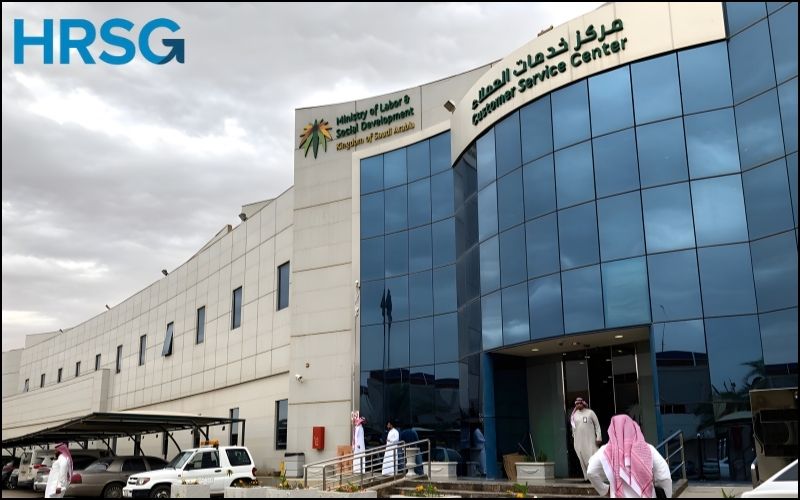
Ministry of Human Resources and Social Development KSA

Saudization

The 2024 amendments have introduced several key measures and reinforced the policy of Saudization. In simple words, Saudization, or Nitaqat in local terms, requires businesses to hire Saudi Arabians. Each business has a hiring quota to fulfill, which depends on the following: 

  • Classification of the business 
  • Size of the business 
  • Percentage of current Saudi Arabians in the workforce

Here’s what the current quota looks like:

  • Businesses with 5 or fewer employees must have 1 Saudi employee
  • International companies must have a Saudi national holding a role next to a general manager
  • Businesses with more than 100 employees need to have 30% Saudization

Probation Period

If the worker is subjected to a probation period, it must be clearly stated in the work contract, and the duration shall not exceed 180 days. Originally, the probation period was 90 days at maximum, and employers had to have a written agreement to extend this period. 

Termination

The employment contract can be terminated under the following circumstances: 

  • Upon expiry of the contract, unless the contract has been explicitly renewed in accordance with the laws. 
  • Mutual agreement, given that the worker’s consent is in writing. 
  • The notice period of termination for the fixed contract is a 30-day notice period if the termination is from the employee’s side and a 60-day notice period if from the employer’s side.
  • In the case of an indefinite contract, termination can occur due to discrimination by either party. The employer must give a 30-day notice period, while the employee must give a 15-day notice period. 
  • A new provision for termination on account of bankruptcy has been introduced. The employment contract will be terminated upon the issuance of a final court order in bankruptcy proceedings. 

Renewal of Employer’s Work Permit

Previously, the Ministry had the right to decline the request to renew an employer’s work permit if they violated the Saudization requirements set by the Ministry. 

Under the new amendment, which is an addition to Article 35, the Ministry can decline the request if the employer violates conditions mentioned in the Regulations, not just the Saudization requirements. Following this amendment, the Regulations will regulate the non-renewal procedures. It ensures that the worker is not affected by the non-renewal of the work permit, including the possibility of transferring the worker’s services to another employer without the consent of the non-compliant employer. 

Regulations for Non-Saudis/Expatriate Workers

Although the contract of the non-Saudi was to be written in a fixed term, if the term of employment was not specified, the duration of the contract was considered equal to the duration of the work permit. 

Post the amendment, if the duration of the contract is not specific, it is considered to be 1 year from the date on which the worker actually assumes their duties. If the worker’s work continues after the term, the contract is considered to be renewed automatically for a similar term of 1 year. 

Furthermore, employers cannot employ non-Saudis for a role other than the role specified in the work permit. Even foreigners cannot change their profession without necessary legal measures.

Training and Development 

Before the amendment, the employer was required to ‘prepare’ his Saudi employees and enhance their technical, vocational, and other skills to replace the non-Saudi workers gradually. Moreover, the employer was required to keep a list of Saudi workers who had replaced non-Saudi workers. 

Under the new law, ‘prepare’ has been replaced by ‘develop a policy to train and qualify,’ which implies a more structured approach. Furthermore, the amendment removes the requirement of a list. It just states that the Regulations will determine the relevant provisions in this regard.

End-of-Service Payment 

The end-of-service payment for the first five years shall be half of a month’s salary for each year of service. For every subsequent year after five years, it shall be one month’s salary for every year. 

Conclusion

Having robust HR policies and a foolproof contract for all your employees can help you navigate the KSA Labor laws with ease and comfort. It will also protect you from violating any of the regulations mentioned in the Regulations or outlined by the Ministry and paying a penalty for the same.

If you need assistance in your HR operations or help with navigating the employee agreements, you can contact HRSG. Our cloud-based HRMS platform (Octofy) offers a comprehensive suite of services to streamline and enhance business operations. From AI-powered HR and payroll solutions to tailored talent consulting and rewards strategies, Octofy optimizes workforce and financial management. 

Image Enquiry