New Laws

Manner of living in your way.

Limited vs Unlimited Contract in UAE

Limited vs Unlimited Contract in UAE

Limited vs Unlimited Contract in UAE 800 500 HRSG

When securing a job in the UAE or any other part of the world, for that matter, employees are usually presented with either a limited contract or an unlimited contract from their employers.

As an employee looking for career opportunities in the UAE, it is extremely important that you know the nature of the contract you are getting into. This directly affects your job responsibilities, termination rules, compensation, and other rights.

In the UAE, however, the recent law, particularly the Federal Decree-Law No. 33 of 2021, which came into effect on 2 February 2022, have abolished unlimited contracts in the private sector. This means every private sector business under the Ministry of Human Resources and Emiratization (MoHRE) has to operate under fixed-term or limited employment contracts.

This blog looks into limited vs unlimited contracts in the UAE in detail. It highlights what these contracts are, how they differ, and why the new laws abolished unlimited contracts in the country. So, let’s get into it.

  • What is an Employment Contract in the UAE?
  • What is a Limited Contract?
  • What is an Unlimited Contract?
  • Limited vs Unlimited Contract in the UAE: Major Differences
  • Recent Change in the Law: Abolishment of Unlimited Contracts in the UAE

What is an Employment Contract in the UAE?

Employment contracts are legally binding agreements that clearly state the rights and obligations of both the employee and the employer. This document provides the foundations for the working relationship between the employer and the employees under the UAE employment laws and regulations. The main goal of this contract is to ensure legal compliance while protecting both parties in case disputes arise.

A typical employee contract contains the following information.

  • Names and contact information of both parties
  • Job title and roles or responsibilities
  • Salary, compensation, and benefits
  • Location and working hours
  • Leave entitlements  
  • Probation period
  • Notice period
  • Contract duration
  • Termination conditions
  • Confidentiality clauses (in some cases) 

The previous UAE Labor Laws, specifically the Federal Law No. 8 of 1980, allowed employers to choose between limited and unlimited contracts. However, the new law forbids unlimited contracts in the private sector.

What is a Limited Contract?

A limited contract or a fixed-term contract is an agreement between an employee and a business with a fixed start and end date. This contract clearly defines the duration of employment and expires automatically once this duration is over. At the end of the contract, both parties can agree to renew the contract.

According to professional recruitment and HR services in the UAE, in case of early termination in a limited contract, businesses have to compensate the employees in terms of salary or benefits. This contract mostly works for project-based or time-specific roles.

For employers, this contract ensures more certainty regarding workforce planning and easier management of project-specific employees, along with predictable contract expiry dates.

For employees, the limited contract offers clear working durations, defined contractual terms and benefits, and greater certainty regarding contractual commitments. However, it comes with potential restrictions on early resignations and less job security at the end of the contract.

What is an Unlimited Contract?

As the name suggests, the type of contract doesn’t come with a fixed end date. The employment can continue until either the employee or the employer wants to terminate the relationship, keeping in mind the applicable notice requirements.  

An unlimited contract does not have a predetermined end date. Employment continues until either party decides to terminate the relationship according to the applicable notice requirements.

This contract ensures greater termination or resignation flexibility while creating a stable ongoing employment relationship. This contract was widely used in the private sector in the UAE before 2022.

An unlimited contract leads to better job security if the employee delivers expected outcomes. This results in long-term employment continuity as well. This contract allows employers to retain employees indefinitely and reduces the administrative burden of contract renewals. However, in this case, termination or resignation disputes can become quite complex.

Limited vs Unlimited Contract in the UAE: Major Differences

Let’s take a closer look at the key differences between limited and unlimited contracts in the UAE to give you a better idea.

  • Contract Duration

Limited contracts have a specific and previously agreed-upon end date. This contract automatically expires when the duration ends. An unlimited contract, on the other hand, has no fixed end date. It can go on until either the employees or the employer decides on termination.

  • Termination Rules

In case of a limited contract, the employer cannot terminate its employees during the contract’s duration unless they have a valid reason for it. In case of termination before the expiry date, compensation is payable to the employees. Employees who resign before the expiration date are also subject to penalties.

In case of unlimited contracts, either party can terminate the contract. However, they have to present the other party with an official notice and follow the legal procedures.  

  • Contract Expiry

Limited contract expires automatically after the agreed-upon contract termination date. Contract renewal is a must to continue a working relationship in this case.

There is no automatic expiration of an unlimited contract. This contract remains active until the employee or the employer terminates it.

  • Job Security

In the case of a limited contract, there is more certainty about the ending of the job. The security of the job is linked with the terms of the contract in this case.

For unlimited contracts, there is an ongoing relationship between the two parties. For some employees, it leads to less job security as they do not know exactly when the termination of the contract will take place.  

  • Compensation for Early Termination

In case of limited contracts, employers who terminate the contract early have to compensate the employees. Employees who resign early may also face compensation obligations in this situation.

For early termination in unlimited contracts, employers need to provide legal grounds and a notice period. If an employee in this contract wants to leave, they have to give an official notice period.

  • Renewal Requirements

A limited contract needs renewal every time its duration ends. However, with unlimited contracts, there is no renewal process as long as the employer-employee relationship continues.

Recent Change in the Law: Abolishment of Unlimited Contracts in the UAE

Before 2021-2022, the private organizations in the UAE had permission to offer both limited and unlimited contracts. However, the introduction of the Federal Decree-Law No. 33 of 2021 stated the prohibition of unlimited contracts in the private sector. According to this law, fixed-term contracts are the standard employment model in the private sector. 

This law urged the parties involved to convert existing unlimited contracts into fixed-term contracts during a transition period, which was till 31 December 2023. This law also establishes that the contract renewals are treated as extensions of the original employment relationship to facilitate the employee benefit calculations.

Here are the main objectives of the abolishment of the unlimited contracts in the UAE. 

  • The main goal of this drastic change is to ensure consistency and clarity across the entire job market in the UAE. 
  • It also aims to create a single or standard contract model to reduce confusion and create uniformity across the labor market.
  • This new framework fits the modern work arrangements like full-time or part-time employment, temporary work, or flexible work models.
  • Fixed or limited contracts lead to clearer documentation and easier monitoring through MoHRE systems, which promotes compliance with the UAE Labor Laws 2026.
  • This law was also introduced to align the labor market in the UAE with international markets that increasingly use the limited contract model.

Current Rules for Fixed-Term Contracts in the UAE

Here are some key rules that govern fixed-term or limited contracts in the UAE.

  • Employers and employees have to agree on a fixed date for the termination of the contract. The initial limit of three years was removed.
  • You can renew the limited contract multiple times based on mutual agreement.
  • If both parties work together after the expiration but without formally terminating the relationship, the contract will be deemed as renewed under applicable legal provisions. 
  • Employers and employees must provide the other party with a notice period of a minimum of 30 days to a maximum of 90 days for the termination of the contract.
  • For the termination of employment, there must be some lawful grounds. This contract can be terminated by mutual agreement, contract expiry, resignation, employer termination, or gross misconduct in specific circumstances defined by law.
  • The gratuity framework applies uniformly across the private sector under the new law. Every employee with at least one year of service is eligible for end-of-service benefits that you must calculate according to statutory formulas.

Conclusion

Limited and unlimited contracts are different in the way they deal with employment termination, benefit calculation, contract duration, and expiration. Limited contracts have a fixed starting and ending date, and termination before this period leads to financial liability.

Unlimited contracts do not have a fixed date. To terminate this contract, you need legal grounds and a fixed notice period that you give to the other party.

However, in the UAE market, the debate between these contracts is mostly of historical context. The Decree-Law No. 33 of 2021 has reshaped the contractual landscape in the country as it abolishes unlimited contracts altogether and mandates limited contracts for every private sector business.

This change creates a more standardized employment framework, which allows employers to clearly state contractual responsibilities and employees to get a better outlook on the duration, expiration, or termination rules.

Visit us at HRSG right now to learn more about UAE employment laws and contracts and to get the best recruitment, HR, accounting, and finance services to launch your career and businesses to new heights.

FAQs

What makes a limited and an unlimited contract different?

Limited contracts have fixed starting and ending dates. Unlimited contracts come with no predefined end date.

Why did the UAE decide to abolish unlimited contracts?

This was done to modernize the labor market in the country. This change aims to standardize contracts, improve regulatory compliance, and align the UAE’s market with international standards.

Is an unlimited contract still valid in the UAE?

No. As of 2022, no MoHRE-regulated private sector business can offer unlimited contracts to its employees.

Is it allowed for an employee to resign from a fixed-term contract before its expiration date?

Yes. Employees can resign if they comply with the notice period or other contractual obligations that the employment agreement outlines.

What is the notice period duration according to recent UAE Labor Laws?

This period is between 30 and 90 days according to the recent UAE labor laws.

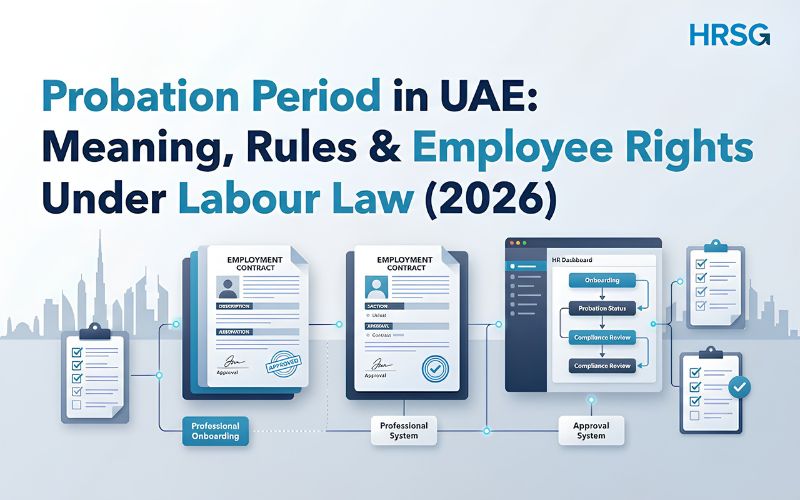
Probation Period in UAE Meaning, Rules & Employee Rights Under Labour Law (2026)

Probation Period in UAE: Meaning, Rules & Employee Rights Under Labour Law (2026)

Probation Period in UAE: Meaning, Rules & Employee Rights Under Labour Law (2026) 800 500 HRSG

UAE’s workforce witnessed a 12.5% increase in 2025 compared to 10.9% in 2024. The Ministry of Human Resources and Emiratisation (MoHRE) reveals that this trend continues into the first quarter of 2026. The growth percentage? 2.5%. Along with the workforce, the number of establishments has increased, too, a positive sign of business expansion.

The government knows exactly how to shape the working conditions here for both employees and employers to retain existing talent and invite more. 

The MoHRE revises and updates its labor laws regularly to stay ahead and adapt to global shifts. One important aspect of these labor laws is the probation period. If you’re someone who wishes to work in the UAE, already has an offer in hand, or is currently on probation, knowing your rights and rules will help you navigate your career better. 

This guide breaks down the meaning, rules, and rights of an employee during probation in the UAE. 

Quick Glance

  • The probation period cannot exceed 6 months. 
  • Your employer can terminate you during probation with a 14-day notice period in writing. 
  • Employees can terminate with 14 days’ notice if they’re leaving the UAE. 
  • You will have to serve a 30-day notice in writing if you want to leave your current employer and join another company in the UAE during your probation. 
  • Employees cannot take “paid” sick leave on probation. 
  • Some employees are exempted from a 1 year work permit ban upon resignation. 

What Is the Probation Period?

Probation period is a “trial” employment period at the beginning of a new role. It allows the employer and employee to see if they can work together. The employer has the chance to assess the employee’s skills, performance, and fit. The employee, on the other hand, has the chance to see if the role meets their expectation. 

Article 9 of Federal Decree-Law No. 33 of 2021 oversees various aspects of the probation period, like the duration, restriction, and termination. 

Duration of Probation

The maximum duration of probation allowed by law is 6 months. Although there is no minimum period specified, it is usually 1 to 3 months. Your employer cannot extend your probation beyond 6 months because it is prohibited by law. The same employer cannot ask you for a second probation. 

Once you successfully complete your probation, your employer will have to count these 6 months as part of your service towards the company. 

Term  Law 
Maximum probation  6 months 
Minimum probation  Not specified (1-3 months)
Extension of probation period  Not allowed 
Second probation by the same employer  Not allowed 

Employer’s Rights During Probation

The employer has the right to:

  • Assess the employee’s skills. 
  • Terminate the employee with a written notice.
  • Comply with necessary labor laws. 

The employer also has to give necessary training to the employee and supervise their work to help them perform better. 

Employee’s Rights During Probation

Employees have the right to:

  • Receive basic salary 
  • Be treated equally 
  • Enjoy legal protection from unfair termination and exploitation

If your employer fails to comply with the rules, you can file a complaint against them. 

Termination Rules During Probation

Termination during probation is very simple. 

For Employers

The employer requires no specific reason to terminate an employee. However, they do need to give a notice 14 days in advance. If the employee feels they have been wrongfully terminated, they can go to the MoHRE for support. 

For Employees

As an employee, you too have to give a 14-day notice period if you’re leaving the country. If you happen to come back within 3 months and join a new employer, your new employer will have to reimburse the original employer’s hiring costs.

What if you want to resign and join another company “without” leaving the UAE? 

In this case, you’ll have to serve a 30-day notice period (in writing). Your new employer will have to compensate for the visa and recruitment costs paid by the old employee, unless agreed otherwise. 

There’s the catch! If an employee signs a contract stating they’ll bear the cost of hiring and visa upon resignation during probation, their old employer has the right to request compensation. 

Important: According to the recent changes, if you do not give a written notice, you can face a one-year ban on your new work permit. 

Termination by  Condition  Notice Period 

(notice served in writing)

Employer  On fair grounds  14 days 
Employee Wants to leave the UAE  14 days 
Employee  Resign and work for new company  30 days 

Who Will Not Receive a Permit Ban?

Certain categories of employees are exempted from a one-year ban on the new work permit if they fail to serve the notice period. These are:

  • People who are on a family-sponsored residency visa
  • Golden visa holders 
  • Employees who have a UAE national as a sponsor 
  • Employees who apply to the same employer for a new work permit 
  • Employees whose skills and qualifications are in demand by the government

Leaves During Probation

Can you take a leave during your probation? Yes, you can. Will you get paid for it? Maybe not. 

Sick Leaves

As per the UAE law, employees who are on probation do not get any sick leave. You can call in sick, but these leaves will be considered “unpaid” and lead to a loss of pay. 

Your employer may still give you partially paid leave, depending on their internal policy. However, you will need to show a valid medical certificate for approval. 

Annual Leaves

By law, you can use some of your annual leave during the probation period as per the contract. However, your employer has to “approve” it. They can choose to deny it. 

Gratuity

Employees are eligible for gratuity or end-of-service benefits only after they complete 1 year of service. You can use a gratuity calculator to calculate the same. Your probation is considered in your service term if you complete it successfully. 

If you resign during probation, you will be eligible for compensation for the time you’ve worked. You can also receive payment for any unused annual leave earned during the probation period. 

Final Word

UAE’s probation laws ensure fair practice by both the employees and the employers. Your employer is responsible for clearly stating all the terms in your contract, complying with payroll and wage systems (Wage Protection System), and being transparent.  

As an employee, it is your duty to check the contract thoroughly before signing, understand all terms, and follow the protocols. If you feel you’ve been wronged by your employer, you can approach the MoHRE to resolve the matter. 

Frequently Asked Questions

Can I leave a company during the probation period in the UAE?

Yes, you can resign during probation. If you’re leaving the UAE, you need to give a 14-day notice. A 30-day notice is necessary if you’re leaving the company to join another company in the UAE. 

How much is the probation period in the UAE?

The probation period in the UAE should not exceed 6 months. Your employer cannot extend the probation period or ask you to serve a second probation. 

Can I resign immediately after the probation period?

Yes, you can resign immediately after the probation period. You will have to serve a 30-90-day notice period as mentioned in your contract. 

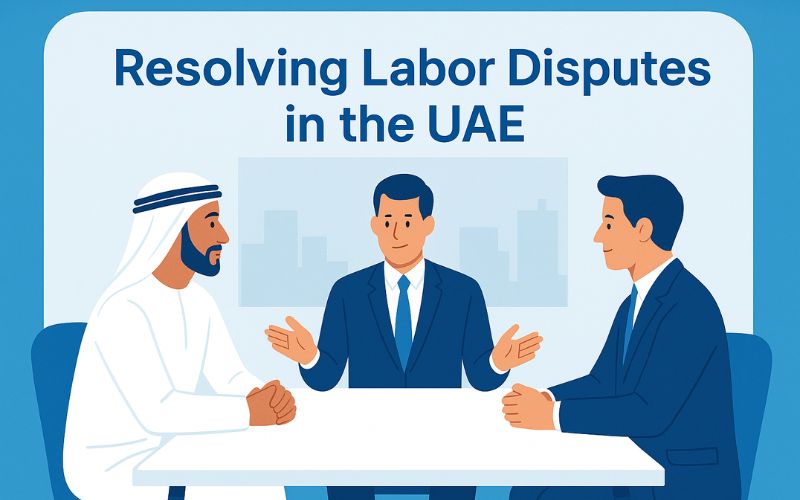
Resolving Labor Disputes in the UAE

Resolving Labor Disputes in the UAE: Key to a Healthier, Stronger Workplace Culture

Resolving Labor Disputes in the UAE: Key to a Healthier, Stronger Workplace Culture 800 500 HRSG

UAE is touted for its highly skilled labor. According to the Global Labour Resilience Index (GLRI) 2024, the UAE has the highest labor resilience of all Arab countries. Not only that, it is one of the top choices for working professionals.

When you are attracting immense global talent, you are also responsible for the quality of the work environment. The UAE recognizes it and takes it very seriously. The Federal Decree-Law No. 33 of 2021 (Regarding the Regulation of Employment Relationship and its amendments), also known as the UAE Labor Law, governs the rights of employees in the private sector. It applies to all the employees working in the UAE, regardless of whether they are UAE nationals or expatriates. 

These laws also help the company, employees, and officials resolve labor disputes. How? We will tell you all about it in this blog. 

UAE Labor Law

The UAE Labor Law came into effect on 2nd February 2022, repealing the previous Federal Law No. 8 of 1980. It governs the employer-employee relationship in the private sector, protecting both the parties. The law covers matters relating to the following:

  • Working hours
  • Overtime
  • Leaves
  • Vacation and public holidays
  • Employing juveniles
  • Employee records
  • Safety standards
  • Minimum wage
  • Termination of employment
  • End-of-service gratuity payments
  • Work injuries and more

Significant Changes to the Labor Law You Need to Know

The new labor laws have brought about significant changes. Below is a brief overview of the same:

  • Employers may continue to give the employee up to 2 months’ salary during employment disputes. 
  • If the dispute is not resolved within 14 days, the Ministry of Human Resources and Emiratisation (MOHRE) can refer the matter to a competent court.
  • Employers can now hire employees for remote work with a mandatory written agreement.
  • If the claim value is under Dh 50,000, MOHRE has the power to make binding decisions. If it exceeds, the body will act as a mediator or refer the case to a competent court.
  • Employees have a 2-year period post their termination to file labor claims. 
  • The penalty for violations by employers has increased.
  • Female employees now have 60 days of maternity leave.
  • Emiratization has increased for companies.
  • Employee non-compete clauses now must be necessary and limited in scope as well as duration. 

There are some more changes to the labor law. For more detailed insight, read our blog UAE Labor Laws 2025: All the Key Details You Need to Know

Resolving Disputes

Despite the best efforts from the government, it is quite natural for disputes to occur between both employers and employees. The question we should be asking is: How do you resolve labor disputes in the UAE?

There are three laws governing labor disputes in the UAE. They are:

  • Federal Decree-Law No. 33 of 2021 — Regulation of Labour Relations in the Private Sector
  • Cabinet Resolution No. 1 of 2022 on the Implementation of Federal Decree-Law No. 33 of 2021 — Regulation of Labour Relations
  • Ministerial Resolution No. 47 of 2022 — Settlement of Labor Disputes and Complaints Procedures.

Let’s take a closer look at what the process looks like. 

To begin with, both parties have an equal chance to file a labor complaint with the Ministry of Human Resources and Emiratisation (MOHRE). These complaints are then settled amicably or referred to a competent court by the MOHRE.

Federal Decree-Law No. 33 of 2021

According to Article 54 of this decree-law, the following guidelines are set:

  • During a dispute, if any of the parties is entitled to the resulting result, they must submit a request to the Ministry. 
  • If an amicable (friendly) settlement is not achieved within 14 days, the Ministry will refer it to a competent court. Along with it, the Ministry will provide a memorandum that will state the following things — [a] a dispute summary, [b] arguments of both parties, and [c] the Ministry’s recommendation. 
  • The court is required to fix a hearing and notify the parties within 3 days from the date of receiving the complaint.
  • Penalties or any relevant action against the employer will only be taken after the dispute is settled or resolved by law. 
  • If the dispute leads to the suspension of the employee’s wages as per the regulations, the Ministry may not use its power to direct the employer to pay the wage for a maximum of 2 months.
  • The Ministry has the power to implement other administrative measures on the establishment to avoid the individual dispute turning into a collective labor dispute.

Additionally, Article 55 exempts the workers or their heirs from paying a judiciary fee for litigation and execution at all levels if the dispute claim is under AED 100,000.

labor dispute Resolved in UAE

Ministerial Resolution No. 47 of 2022

Ministerial Resolution No. 47 of 2022 guides workers who have submitted a labor complaint to the labor court. Here’s what it states:

  • Once the MOHRE approves the referral to the judiciary, the worker must register the labor complaint with the court within 14 days. 
  • Workers need to refrain from working for another employer unless they have a temporary work permit from the Ministry
  • If the labor lawsuit results in the termination of the working relationship, the worker needs to submit a request to cancel the original work permit within 14 days from the date the final judgment is passed.
  • If the final judgment results in cessation of work, the worker’s work permit will be canceled after 6 months from the date of complaint referral to the court.

Filing Labor Complaints  

There are three ways the employee or the employer can file a complaint and track it. 

Via Website

  • Visit the official MOHRE website. 
  • On the menu tab, find ‘Services.’ 
  • From the dropdown menu, click on ‘Add Complaint.’
  • The Add Complaint screen will open. 
  • Fill in the relevant details. Choose wisely from the dropdown list that appears for ‘Complaint type.’
  • Submit the form

If you wish to use the mobile app, you can do that as well by following the same process. When you submit the complaint, a Twa-fouq Centre legal advisor will contact you within 72 hours. 

You will receive the transaction number as well. Use it to track the status of your complaint in the MOHRE Inquiry Services section. 

Call Centre

Alternatively, you can get assistance from the MOHRE call center. Dial 600-5900-00 to file a complaint. Here, a customer care representative will guide you and help resolve your complaint. They may forward it to the Department of Complaints and Advice if they are unable to resolve it. You will be assisted in filing an official complaint for legal action. 

Twa-fouq Service Centres

As we said, the UAE government takes great care of its employers and employees. The Twa-fouq Service Centres are evidence. These centers are licensed by the MOHRE and function under its direct supervision. Their primary role is to help the parties reach an amicable solution, investigate the complaint, and make suggestions to the Ministry for approval. Additionally, they offer legal advice if you’re unaware of your rights. The good part is that they deliver these services in Arabic, Urdu, and English. 

Conclusion 

UAE has established a very strategic and convenient system for employers and employees to register complaints and resolve labor disputes. They have also provided additional support in the form of Twa-fouq Service Centres to make the entire process easier. 

Furthermore, the deadlines for resolving disputes for all parties involved and MOHRE’s powers in case of dispute settlements are aimed at finding a solution as soon as possible.

That being said, there’s a chance to avoid disputes by following all the protocols laid down by the government, designing fair policies, and having strong HR operations in place. 

We at HRSG support companies with powerful HR processes. These include support for tasks such as workforce administration, payroll & compliance services, attendance & leave management, benefits administration, travel & expense management, HR helpdesk, talent management services, recruitment, performance, onboarding, compensation, and more.

We help you rewire your organization with a new, more connected model that leaves no space for miscommunication or misalignment. Connect with us today for actionable results.

KSA Labor Laws 2025

KSA Labor Laws 2026: A Comprehensive Guide for Employees and Employers

KSA Labor Laws 2026: A Comprehensive Guide for Employees and Employers 800 500 HRSG

The labor laws in the Kingdom of Saudi Arabia, KSA otherwise, are a set of rules and regulations that govern the labor practices in the kingdom. Initially issued by the Royal Decree in September 2005, these labor laws have undergone significant amendments, the most recent being 2024. 

The recent amendments to the labor laws aim to create an attractive work environment and achieve Saudi’s Vision 2030. This blog explores the KSA labor laws to help prepare employers and employees for the year 2025. It will answer important topics around women’s employment, key changes to the laws, labor regulations, vision 2030, and more. Let’s start. 

Vision 2030: What You Need to Know

Vision 2030 is Saudi Arabia’s effort to diversify the economy, develop its public sectors, as well as enhance the overall quality of life for Saudi citizens. The Vision Realization Programs are the driving force behind Vision 2030. Each program has a distinct way forward and an approved delivery plan that meets pre-defined objectives and key performance indicators. Some of the programs included are:

  • Fiscal Sustainability Program
  • Public Investment Fund Program
  • Financial Sector Development Program
  • Human Capability Development Program
  • National Industrial Development and Logistics Program

Some of the goals, as shared by the key leaders, are:

  • Harness the strong investment capabilities to stimulate the economy and diversify it.
  • Leveraging the strategic location and transforming it into a global hub connecting Asia, Europe, and Africa. 
  • Better partnership opportunities with the private sector

Labor Laws: Key Changes & What You Should Remember

The new amendments are said to affect 38 articles of the Labor Law, with 7 articles being deleted and 2 new articles being added. The following is a detailed breakdown of the changes and what you should be aware of in 2025.

Employment Laws: The Basics 

Age (for Employers)

KSA has a minimum age requirement for employment. For males, it is 21 years old, and for females, it is 22 years old. Moreover, anyone who is 15 or older but younger than 18 years of age is considered a ‘minor’ and cannot be employed in hazardous roles or any job that endangers their health, safety, or morals. That being said, any individual younger than 15 years cannot work or enter a place of work. These laws apply to every employee, no matter their nationality. 

Health & Dress Code (for Employees)

All employees must submit a certificate of fitness by undergoing a medical assessment at an accredited medical center to prove their fitness for the role. As for dress codes, females have a dress code that is suggested to follow in the workplace. The dress code is as follows: 

  • Top: Full-sleeved clothing with a high neckline and loose-fitting 
  • Bottom: Full-length and loose skirts or bottoms

Time Management Laws

The time management laws in the KSA regulate working hours, over hours, rest periods, etc. Here’s a breakdown of the hours. 

  • Working hours: 8 hours a day and 48 hours a week. During Ramadan, the hours are reduced to 6 per day and 36 per week. 
  • Rest periods: Employees are entitled to a minimum of 30 minutes of break for rest, meals, or prayers after 5 consecutive hours of work.
  • Overtime: Overtime hours will be entitled to overtime pay at 1.5 times their regular hourly wage. Alternatively, the employer and employees can agree to a paid compensatory time off instead of overtime pay.
  • Weekly rest: All employees are entitled to one day of full rest. Officially, Friday is a weekly off in Saudi Arabia. However, businesses can change this. 
  • Public holidays: All employees are entitled to paid leaves for the 5 officially recognized public holidays. 
  • Annual leaves and holidays: After 1-5 years of service, the employees are entitled to 21 days of paid annual leave. This increases to 30 days after 5 years of service. 
  • Sick leaves: Employees can take up to 30 days of paid sick leave with medical certificates. The next 60 days may go from one-third to the third quarter.
  • Maternity Leave: Maternity leave for all female employees has been increased from 10 weeks to 14 weeks now.
  • Paid Bereavement Leave: 3 days of paid leave in the event of the death of a spouse or a relative.
  • Hajj leave: Muslim employees can take 10-15 days of paid leave to perform the Hajj pilgrimage after completing 2 years.

Ministry of Human Resources and Social Development KSA

Saudization

The 2024 amendments have introduced several key measures and reinforced the policy of Saudization. In simple words, Saudization, or Nitaqat in local terms, requires businesses to hire Saudi Arabians. Each business has a hiring quota to fulfill, which depends on the following: 

  • Classification of the business 
  • Size of the business 
  • Percentage of current Saudi Arabians in the workforce

Here’s what the current quota looks like:

  • Businesses with 5 or fewer employees must have 1 Saudi employee
  • International companies must have a Saudi national holding a role next to a general manager
  • Businesses with more than 100 employees need to have 30% Saudization

Probation Period

If the worker is subjected to a probation period, it must be clearly stated in the work contract, and the duration shall not exceed 180 days. Originally, the probation period was 90 days at maximum, and employers had to have a written agreement to extend this period. 

Termination

The employment contract can be terminated under the following circumstances: 

  • Upon expiry of the contract, unless the contract has been explicitly renewed in accordance with the laws. 
  • Mutual agreement, given that the worker’s consent is in writing. 
  • The notice period of termination for the fixed contract is a 30-day notice period if the termination is from the employee’s side and a 60-day notice period if from the employer’s side.
  • In the case of an indefinite contract, termination can occur due to discrimination by either party. The employer must give a 30-day notice period, while the employee must give a 15-day notice period. 
  • A new provision for termination on account of bankruptcy has been introduced. The employment contract will be terminated upon the issuance of a final court order in bankruptcy proceedings. 

Renewal of Employer’s Work Permit

Previously, the Ministry had the right to decline the request to renew an employer’s work permit if they violated the Saudization requirements set by the Ministry. 

Under the new amendment, which is an addition to Article 35, the Ministry can decline the request if the employer violates conditions mentioned in the Regulations, not just the Saudization requirements. Following this amendment, the Regulations will regulate the non-renewal procedures. It ensures that the worker is not affected by the non-renewal of the work permit, including the possibility of transferring the worker’s services to another employer without the consent of the non-compliant employer. 

Regulations for Non-Saudis/Expatriate Workers

Although the contract of the non-Saudi was to be written in a fixed term, if the term of employment was not specified, the duration of the contract was considered equal to the duration of the work permit. 

Post the amendment, if the duration of the contract is not specific, it is considered to be 1 year from the date on which the worker actually assumes their duties. If the worker’s work continues after the term, the contract is considered to be renewed automatically for a similar term of 1 year. 

Furthermore, employers cannot employ non-Saudis for a role other than the role specified in the work permit. Even foreigners cannot change their profession without necessary legal measures.

Training and Development 

Before the amendment, the employer was required to ‘prepare’ his Saudi employees and enhance their technical, vocational, and other skills to replace the non-Saudi workers gradually. Moreover, the employer was required to keep a list of Saudi workers who had replaced non-Saudi workers. 

Under the new law, ‘prepare’ has been replaced by ‘develop a policy to train and qualify,’ which implies a more structured approach. Furthermore, the amendment removes the requirement of a list. It just states that the Regulations will determine the relevant provisions in this regard.

End-of-Service Payment 

The end-of-service payment for the first five years shall be half of a month’s salary for each year of service. For every subsequent year after five years, it shall be one month’s salary for every year. 

Conclusion

Having robust HR policies and a foolproof contract for all your employees can help you navigate the KSA Labor laws with ease and comfort. It will also protect you from violating any of the regulations mentioned in the Regulations or outlined by the Ministry and paying a penalty for the same.

If you need assistance in your HR operations or help with navigating the employee agreements, you can contact HRSG. Our cloud-based HRMS platform (Octofy) offers a comprehensive suite of services to streamline and enhance business operations. From AI-powered HR and payroll solutions to tailored talent consulting and rewards strategies, Octofy optimizes workforce and financial management. 

UAE Labor Laws 2025

UAE Labour Law 2026: Key Changes Every Employer & Employee Must Know

UAE Labour Law 2026: Key Changes Every Employer & Employee Must Know 800 500 HRSG

The UAE is well-known for its advanced approach to everything, including its labor laws. The government’s ability to stay ahead of the curve and meet the changing demands of the employees as well as the employers makes it one of the top destinations for building a global career. 

This year, the UAE has made significant amendments to its UAE Labor Laws intending to modernize and enhance various aspects of employment for both parties involved. What are these changes? Here’s a breakdown of all the fundamental changes for you and what they mean.

UAE Labor Laws 

The UAE Labour Law is governed by Federal Decree-Law No. 33 of 2021, which replaced the previous Federal Law No. 8 of 1980 and has been further amended by Federal Decree-Law No. 9 of 2024, effective from August 31, 2024. It applies to all private sector employees in mainland UAE and most free zones — with the exception of DIFC and ADGM, which operate under their own employment frameworks.

Here are some of the critical changes that have come through:

1. Salary During Employment Disputes 

According to this change, the employer may have to continue giving their employees salary for up to 2 months while any employment disputes are being resolved. Moreover, if the dispute isn’t settled within 14 days, The Ministry of Human Resources and Emiratisation (MOHRE) has the power to refer the dispute to a competent court. 

The idea is to provide financial stability to the employees during lengthy disputes and give them more power. 

2. Flexible Working Arrangements 

Previously, only full-time working employment was allowed in the UAE. Part-time working arrangements were introduced in 2019. However, it is now that employers can hire employees for temporary, flexible, remote working, and job-sharing roles. Moreover, they have the option of compressed workweek options. 

Additionally, some of the key requirements of remote work provisions include:

  • Mandatory written agreement 
  • Specific working hours 
  • Data security protocols 
  • Guidelines on performance monitoring

3. Revised Claim Value for Disputes

If the labor dispute claim value is under Dh 50,000, then The Ministry of Human Resources and Emiratisation (MOHRE) has the power to make binding decisions. If it exceeds the said amount, the MOHRE will continue acting as a mediator and may refer it to a competent court. This is done to streamline the disputes based on monetary values. 

4. MOHRE Decisions Are ‘Writ of Execution’

With this amendment, the decisions of The Ministry of Human Resources and Emiratisation (MOHRE) become legally enforceable, strengthening the body’s authority. 

MOHRE UAE Labor Laws

5. Extended Time for Labor Claims 

As per earlier labor laws, the employees had 1 year from the date of termination of the employment relationship to file a labor claim. Post amendments, employees now have a 2-year time frame from their date of termination to file any labor claims against their previous employer. 

6. Increased Penalty for Violations by Employers 

Besides having to pay wages for up to 2 months during a dispute, the amendments to the labor laws have increased the penalty for employer violations. These penalties can be anywhere ranging from AED 100,000 and AED 1 million, depending on the severity of the violation.

7. Extended Maternity Leaves 

Maternity leave is 60 days total: 45 days fully paid followed by 15 days at half pay. Employees may also take additional unpaid leave of up to 100 days with medical proof. Working mothers are entitled to two 30-minute nursing breaks daily for six months after birth. These protections apply even in cases of summary dismissal.

8. Increase in Emiratization 

For companies with 50 or more employees, the Emiratization rate increased to 2% per year across skilled job categories. This is in addition to sector-specific targets in banking, insurance, financial services, and telecommunications. The penalty for non-compliance is AED 6,000 per unfilled Emirati quota position per month. For a company missing its target by five positions, that equals AED 30,000 in monthly penalties — a significant escalation from the AED 108,000 annual figure previously cited.

9. Non-Compete Restrictions

The latest amendments include specific rules for employee non-compete. The non-compete clauses must be necessary and limited in scope and duration. The new law states that the non-compete can exceed a duration of 2 years. Moreover, employees need to be compensated for agreeing to the non-compete clauses, which must be paid during the period the clauses are in effect.

Moreover, the employee can challenge the non-compete clauses if they are too restrictive or unreasonable. In such a situation, the labor court can review and invalidate the clause if deemed necessary. 

10. Non-Compete Restrictions

Three new leave categories now apply under the amended law:

Study Leave: 10 working days per year for employees with 2 or more years of service with the same employer. Whether this leave is paid or unpaid should be clarified in the employment contract.

Compassionate Leave: 5 days paid leave on the death of a spouse or first-degree sibling; 3 days paid leave on the death of a parent, child, grandparent, or grandchild.

Hajj Leave: 30 days unpaid leave, available once per employment period for eligible employees.

How Can Employers Adhere to New Labor Laws?

Step 1 is ensuring that you adhere to new labor laws in 2025 and meet international standards to learn about their nitty-gritty in detail. Once you are equipped with all the knowledge, step 2 would be to review your existing employee contracts and make necessary changes to them to reflect the latest practices. 

Consider including clauses for flexible working arrangements, salary continuation, and other aspects. As an employer, you need to develop clear policies addressing important topics such as harassment prevention, discrimination, as well as non-compete. Finally, informing your employees about the significant changes will help you stay compliant. 

Conclusion

The new labor law focuses on further fine-tuning the work environment in the UAE, giving employees more power and helping employers retain top talent. It is aimed at creating a positive and fair work environment, which is globally appreciated and enhances a company’s reputation in the market.

If you need assistance in your HR operations or help with navigating the employee agreements, you can contact HRSG. Our cloud-based HRMS platform (Octofy) offers a comprehensive suite of services to streamline and enhance business operations. From AI-powered HR and payroll solutions to tailored talent consulting and rewards strategies, Octofy optimizes workforce and financial management.

Image showing labor laws for HR professionals

Understanding Labor Laws and Compliance Requirements in Pakistan: A Guide for HR Professionals

Understanding Labor Laws and Compliance Requirements in Pakistan: A Guide for HR Professionals 602 422 HRSG

The labor laws of Pakistan hold significant importance in regulating the relationship between employers and employees, ensuring equitable treatment and protecting workers’ rights. For HR professionals, comprehending these labor laws and compliance requirements is pivotal to managing human resources efficaciously and establishing a legally compliant workplace. Through this blog, we aim to delve into the fundamental facets of employment regulations in Pakistan, offering invaluable insights for HR professionals striving to align their workplace policies with the national labor laws.

read more

UAE Employment Laws and Regulations

UAE Employment Laws and Regulations 900 530 HRSG

Federal Decree Law No. 33 of 2021 on the Regulation of Labour Relations in the Private Sector, known as the ‘UAE Labour law’, governs the labour rights of employees in the private sector. It applies to all employees working in the UAE, whether UAE nationals or expatriates. However, there are certain categories of employees who are exempt from the law and may have to follow another set of regulations. Learn about employment laws and regulations in the private sector.

Working in the private sector

Federal Decree Law No. 33 of 2021 on the Regulation of Labour Relations in the Private Sector, known as the ‘UAE Labour law’, governs the employer-employee relations in the private sector. The provisions of the law apply to all businesses, employees and employers in the private sector. The law became effective on 2 February 2022. It repealed the previous Federal Law No. 8 of 1980.

The new law aims to protect both parties in the employment relationship and enables them to obtain their rights in a balanced manner. It covers matters related to working hours, overtime, leaves, vacation and public holidays, employing juveniles, employee records, safety standards, minimum wage, termination of employment, end of service gratuity payments, work injuries amongst others.

The new law introduces several work models such as full-time, part-time, temporary and flexible. It abolishes the ‘unlimited’ type of contracts and admitted only limited or fixed-term contracts. It grants new types of leaves and tackles issues related to harassment, bullying, physical violence and psychological abuse against employees.

The law prohibits forced labour and discrimination on the basis of gender, race, colour, sex, religion, national or social origin or disability. It also spells out employers’ obligations towards employees.

Scope of the law

The law applies to all employees working in the UAE, whether UAE nationals or expatriates. However, it does not apply to:

employees and workers of the federal government and the local government entities employees of the armed forces, police and security domestic servants.

Resolutions and circulars

Learn about key resolutions and circulars pertaining to employer-employee relations in the private sector.

Domestic helpers law

Read provisions of  ‘domestic helpers law’ (PDF, 500 KB).

Ministry of Human Resources and Emiratisation (MoHRE) is responsible for overseeing the employer-employee relations and maintaining labour rights in the private sector. Contact MoHRE for more information on your rights and obligations as per the ‘UAE labour law’.


Disclaimer: This page has been sourced directly from https://u.ae/en/information-and-services/jobs/employment-laws-and-regulations-in-the-private-sector

Image Enquiry