Awareness

Maternity Leave in UAE

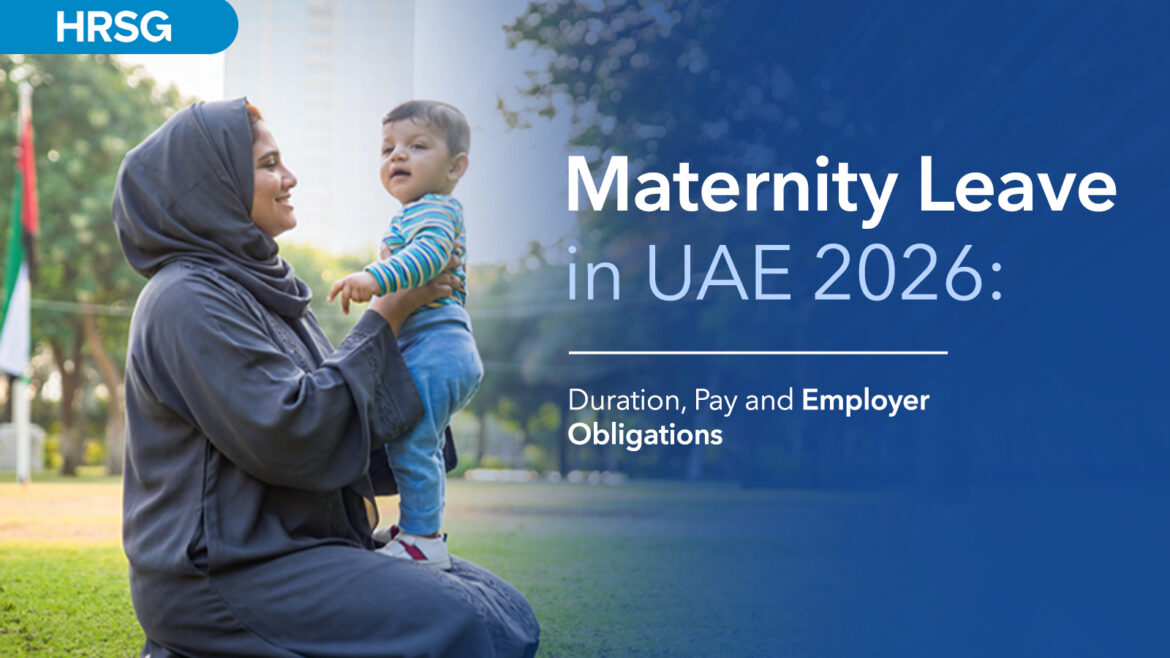
Maternity Leave in UAE 2026: Duration, Pay and Employer Obligations

Maternity Leave in UAE 2026: Duration, Pay and Employer Obligations 1600 1000 HRSG

The guidelines for maternity leave in the UAE differ for private or federal government entities. However, in most cases, female workers in the region get at least a 60-day maternity leave. Out of these leaves, about 45 days are fully paid, while 15 days are at half pay. 

The UAE Labor Law 2026 also establishes clear guidelines for additional leave in case of medical emergencies after childbirth. This law also imposes certain obligations that every employer has to fulfil when it comes to maternity leave.

For employers or HR services in Dubai who need to plan or approve maternity leave, it is extremely important to know the duration, pay rules, and other important responsibilities they have towards expecting employees. This is the only way to make sure there are no violations of the local labor laws when it comes to maternity leave policies in your organization.


  • What Is the UAE Maternity Leave Law in 2026?
  • Additional 45 Days of Unpaid Leave for Pregnancy or Childbirth-Related Illness
  • Protection Against Termination Because of Pregnancy or Maternity Leave
  • Breastfeeding Breaks After Maternity Leave
  • How Much Is Maternity Leave Pay in the UAE?
  • Is There a Minimum Service Requirement for Maternity Leave?
  • Employer Obligations for Maternity Leave in the UAE

What Is the UAE Maternity Leave Law in 2026?

The main law that governs maternity leave in the UAE is the Federal Decree-Law No. 33 of 2021 on the Regulation of Labor Relations. This law states that private sector female employees get 60 days of statutory maternity leave where 45 days are with full pay and 12 days are with half pay.  Women can start this leave up to 30 days before the date of delivery.

This law mainly applies to private sector employees. However it is subject to exclusions and special regimes that the law specifies.

Female employees who work at permanent positions in the federal government get 90 days of maternity leave with full pay. One key thing to remember is that this entitlement does not depend on the completion of a certain service duration. And not just that even employees who are on probation can also get maternity leave as per MOHRE’s guidelines.

This law also states that every employer has the obligation to grant the leave upon request that is supported by a medical certificate. It is also worth noting that the Federal Decree-Law No. 33 of 2021 generally governs the private sector. This law doesn’t regulate maternity leave for federal or local government employees.

UAE employment laws and regulations for federal government employees state that female workers in this sector get 90 days of fully paid maternity leave entitlement. 

The guidelines for maternity leave are also different for employees in free zones. Businesses in these zones follow their own maternity leave policies. This is why as a business you need to consider your type and jurisdiction to ensure better maternity leave management for your employees.


Additional 45 Days of Unpaid Leave for Pregnancy or Childbirth-Related Illness

For private sector employees, maternity leave is not limited to 60 days. New mothers can also get an additional 45 days of unpaid leave either continuously or intermittently in case of complications after the pregnancy that interfere with their ability to work.  

To apply for this leave you simply have to present a medical certificate to the employer as per HR policies and procedures in the UAE. The law also specifies that this additional 45 days of leave is not a part of the service period, retirement-contribution, or end of service benefit calculations.  

This is why your leave management system or personnel who handle strategic HR consulting solutions should not treat every leave request after the maternity leave as ordinary leave, annual leave, or unauthorized absence, especially when the employee follows all statutory conditions and presents you with verified medical documents.

Maternity law of the UAE also makes you entitled to 30 days of paid leave and another 30 days of unpaid leave if you give birth to a baby who is sick or suffers from disabilities and needs constant attention.

Understanding these provisions can help you better plan your employee’s return-to-work dates. This results not only in better HR planning but also prevents unintentional labor law violations.


Protection Against Termination Because of Pregnancy or Maternity Leave

Every employer in the UAE has an obligation to offer protection against termination in case of pregnancy-related absences under Article 30. Employers do not have the authority to fire an employee on the sole basis of their maternity leave of absence after the approval of leave. They are also not allowed to issue a termination notice when the employee is on paid maternity leave.

This provision aims to give employees who qualify for maternity leaves a specific statutory protection against wrongful termination at this important time of their life.


Breastfeeding Breaks After Maternity Leave

UAE’s laws also support new mothers after their maternity leave. New mothers are allowed one or two breastfeeding breaks each day for up to 6 months from the date of delivery.

The duration of these nursing breaks should not be more than one hour per day. Employers are also not allowed to deduct the pay of the employees for these breaks. This statutory workplace accommodation for breastfeeding after maternity leave ensures both the mother and the newborn are able to get the care they need at this important time.


How Much Is Maternity Leave Pay in the UAE?

Employees in the private sector of the UAE are entitled to a maternity leave of 45 days with full pay. For the next 15 days the organization they work for has to pay them half of their wage.

One key thing here is that the law specifically uses the term wage instead of basic salary or pay. This distinction is crucial. The wage in the UAE labor laws refers to basic salary plus applicable cash allowances and benefits in kind allocated to the employee as per the employment contract. Basic wage or salary on the other hand excludes the additional benefits.

This means when calculating payment for these types of leaves in the UAE, employers have to take both the basic salary along with additional cash or benefits into account. This is possible if you review the contractual composition of the employee’s wage when you do these calculations.


Is There a Minimum Service Requirement for Maternity Leave?

There is no minimum service period requirement for employees to become eligible for maternity leave in the private sector in the UAE as per the Federal Decree-Law No. 33 of 2021. This means employees who have just become part of a private company or are on a probation period are still eligible for a maternity leave of 60 days. Moreover, this law also applies to both local and expat female workers with less than one year of service.

Employer Obligations for Maternity Leave in the UAE

As an employer, you need to have a clear idea about your obligations when it comes to granting maternity leave to eligible employees. This is a must for streamlining your HR processes and showing compliance with the labor laws in the UAE.

Here are some key things you need to pay attention to.

  • Grant the Statutory Maternity Leave

It is your main obligation to grant every eligible employee a 60-day maternity leave if they apply through the proper channels and follow your internal HR guidelines to the letter under Article 30 of the Federal Decree.

  • Apply the Correct Pay Structure

When calculating pay you need to apply an accurate pay structure. This means you are not allowed to cut any pay for the first 45 days of the maternity leave. For the next 15 days you must ensure the employee gets half of their wage for this time. You also need to ensure you add both the basic salary and additional benefits to the maternity leave pay calculation.

  • Protect the Employee from Pregnancy-Based Termination

It is also your obligation to safeguard the job of the employee while they are on maternity leave. You need to refrain from hiring new staff in their place or giving them a notice of termination while the leave continues.

  • Process Additional Medical Leave Correctly

Employers also have to recognize or grant additional unpaid leave if the employee presents them with medical evidence that indicates health complications or child health issues after the delivery.

  • Provide Breastfeeding Breaks

Once the employee is back to work, it is also your obligation as an employer to grant them one or two statutory one hour paid breaks to breastfeed their newborn.

  • Maintain Accurate HR and Payroll Records

And finally it is your obligation to keep an accurate and updated record of maternity leaves and the salary calculations for these leaves. Make sure to keep the medical certificates and other relevant documentation safe both in physical and digital formats. 

You also need to record the exact delivery date, paid/unpaid leaves, and return-to-work dates to make sure there are no confusion about the statutory leave entitlements.

Conclusion

As per the UAE’s 2026 maternity leave framework every female employee is eligible for a statutory 60 days of maternity leave. Employees are entitled to 45 days of leave with full pay and 15 days of leave with half pay. Apart from these 60 days employees can also get an additional 30 days of paid and 30 days of unpaid leave if the pregnancy results in complications for the mother or the child.

Apart from this the law also has provisions that prevent employers from terminating employees who are on maternity leave. Employers also have to grant breaks for breastfeeding to new mothers for up to 6 months and pay attention to accurate documentation and payroll calculations for this duration. This ensures expecting mothers receive all the support they need in this important time to take care of themselves and of the newborn while also retaining their professional status in the UAE’s competitive business market. 

Visit our website, HRSG, today to get useful insights into maternity leave policies in the UAE from our experts in the industry. We also specialize in human resources, accounting, bookkeeping, staff augmentation, and integrated facility management services for businesses of all sizes and types.
What Is PTO? Full Form, Meaning and How It Works in UAE

What Is PTO? Full Form, Meaning, and How It Works in the UAE

What Is PTO? Full Form, Meaning, and How It Works in the UAE 800 500 HRSG

PTO is one of those workplace terms that gets used a lot, but not everyone is sure what it means. You might have seen it on a job offer or an HR portal and wondered what exactly it covers here in the UAE.

PTO simply stands for Paid Time Off. It is the time an employee can take away from work while still getting their salary. But here is the catch. The way PTO works in the UAE is not the same as in countries like the US.

In the UAE, paid time off is not one single leave balance that you dip into for any reason. It is a set of separate leaves, each with its own rules and pay, all set by Federal Decree-Law No. 33 of 2021.

This blog covers all the ins and outs of PTO in the UAE. So keep on reading till the end.

  • What Is PTO? Full Form and Meaning
  • How PTO Works in the UAE
  • Types of Paid Time Off (PTO) in the UAE
  • How PTO Pay Is Calculated in the UAE
  • Key Considerations for Employers and Employees

What Is PTO? Full Form and Meaning

The full form of PTO is Paid Time Off. It is an umbrella term for any time an employee takes away from work while still getting paid. This means the employee does not lose their salary for the days they are on approved leave.

In many countries, PTO is a single pool of days that employees can use for any reason, whether it is a vacation, an illness, or a personal errand. The employee simply draws from this one balance.

The UAE, however, does not follow this single-pool model. Here, paid time off is what the labor law divides into separate, clearly defined leave types. Each type has its own eligibility rules, its own number of days, and its own pay policy.

So when we talk about PTO in the UAE, we are really talking about the collection of statutory leaves that every eligible employee is entitled to under the law.

How PTO Works in the UAE

In the UAE, paid time off works through the leave entitlements set out in the labor law. Every private-sector employee who meets the eligibility criteria can use these leaves without losing their pay.

The statutory leaves apply to employees who work under a full-time employment contract in the private sector. Employees on part-time, flexible, or fixed-term contracts may also be eligible, but in this case, the entitlement is subject to applicable regulations.

Another thing to keep in mind is that most leaves are tied to how long you have been with the company. So the longer you stay, the more leave you end up with.

Government employees and those in certain free zones may follow slightly different rules. These employees need to look into their own organization’s policies to determine whether they follow federal labor laws or have their own leave policies in the UAE.

Employers are free to offer more generous paid time off than the law requires. Many private and multinational organizations choose to provide extra leave days as part of their benefits package to attract and retain top talent.

Types of Paid Time Off (PTO) in the UAE

Here are the main types of paid time off that employees in the UAE are entitled to under the labor law.

  • Annual Leave

Annual leave is what most people think of as vacation time. Employees who complete one year of service are entitled to 30 calendar days of paid annual leave every year.

Employees who have completed six months but not a full year get two days of leave for each month of service. During the first six months of employment, there is no statutory annual leave entitlement.

  • Sick Leave

Employees can get up to 90 calendar days of sick leave in the UAE every year once they complete their probation period. However, this leave is not fully paid for the entire duration.

The pay is structured in three parts. Employees get full pay for the first 15 days, half pay for the next 30 days, and no pay for the remaining 45 days. To become eligible, the employee must notify the employer and submit a valid medical certificate.

  • Maternity Leave

Female employees in the private sector are entitled to 60 days of maternity leave. Out of these, the first 45 days are fully paid, while the next 15 days are paid at half salary.

In some cases, the mother can take additional unpaid leave if she or her child faces a medical condition as a result of the pregnancy or childbirth.

  • Parental Leave

The UAE was one of the first countries in the region to introduce parental leave. Both parents, whether the mother or the father, are entitled to five working days of paid parental leave. This leave can be taken within the first six months from the date of the child’s birth.

  • Public Holidays

Employees in the UAE also get paid days off on the official public holidays announced by the government. And if you do end up working on one of these days, your employer has to make up for it, either with extra pay or a day off later.

  • Other Paid Leaves

There are a few other leaves worth knowing about too. Employees can take bereavement leave if a close family member passes away. There is also study leave for those enrolled in a UAE university, and a one-time leave to perform Hajj. How many days you get, and whether they are paid, depends on the conditions the law sets for each one.

How PTO Pay Is Calculated in the UAE

The pay during paid time off depends on the type of leave the employee takes. This is an area where many new employees in the UAE get confused, so it is worth understanding clearly.

Annual leave is paid at the employee’s full wage, which covers the basic salary plus any regular allowances. Sick leave works differently. Here, the pay drops in stages, from full pay to half pay and then to nothing, based on how many days are taken. Maternity leave falls somewhere in between, with full pay for the first 45 days and half pay for the next 15.

The idea behind these pay rules is fairly simple. The point is to tide employees over financially while they are off, but not at a cost the business cannot carry. And because the split is spelled out from the start, nobody is left guessing, which is usually where pay disputes begin.

Key Considerations for Employers and Employees

A couple of smaller details tend to get overlooked, so they are worth a quick word here, for employers and employees alike.

  • For Employers

If you are the employer, the starting point is a clear leave policy written into your HR policies and procedures in the UAE. From there it comes down to the basics. Approve leave requests fairly, do not sit on them, and pay people the right amount for the days they are off. Keeping a record of who has taken what saves you headaches too, since it is easy to lose track otherwise. This is exactly the kind of thing a decent HR and payroll system handles for you.

  • For Employees

As an employee, the main thing is to apply for your leave the proper way and give your employer a heads-up in good time. If it is sick leave, you will also need to hand in a valid medical certificate without dragging it out. And when your leave is over, try to get back to work on time so you do not run into friction with your employer.

  • Unused Leave and Final Settlement

One more thing people often forget is what happens to leave they never used. If you leave the company or your contract comes to an end, you get paid out for any annual leave days you did not take. That payment is rolled into your final settlement, along with your other end-of-service dues.

Conclusion

Paid time off, or PTO, is simply the paid leave that employees are entitled to while they are away from work. In the UAE, this is not a single leave balance but a set of clearly defined leaves that the labor law protects, including annual leave, sick leave, maternity leave, parental leave, and public holidays.

Every one of these leaves comes with its own eligibility rules and pay structure. This is why it is important both for employers and employees to understand how paid time off works in the region. Getting familiar with these rules now can save you a lot of avoidable disputes and compliance headaches later on.

For the full picture, take a look at our detailed guide to the UAE labor laws.

Visit us at HRSG today if you want a hand with leave management or HR compliance in the UAE. Alongside that, we handle recruitment, payroll, and other people solutions that businesses of every size rely on, both in the UAE and beyond.

Salary Benchmarking in UAE: A Complete Guide for Employers (2026)

Salary Benchmarking in UAE: A Complete Guide for Employers (2026)

Salary Benchmarking in UAE: A Complete Guide for Employers (2026) 800 500 HRSG

4.1%

UAE Avg Salary Increase 2026

1.8%

UAE Inflation Forecast 2026

60–70%

Base Salary of Total Package

30–40%

Allowances of Total Package

Salary benchmarking in the UAE has become one of the most critical tools for employers trying to attract and retain skilled talent in one of the world’s most competitive job markets. Whether you’re reviewing compensation for existing staff or setting pay for a new hire, getting it right requires more than gut feel — it requires structured, data-driven benchmarking against current UAE market standards.

This guide covers everything UAE employers need to know about salary benchmarking in 2026: what it is, its key components, why it matters in the UAE context, best practices, indicative salary ranges by function, and the most common mistakes to avoid.

  • What Is Salary Benchmarking?
  • Key Components of UAE Salary Benchmarking
  • Why Salary Benchmarking is Important for Employers in UAE (2026)
  • Salary Benchmarking in the UAE: Best Practices for Employers
  • Common Salary Benchmarking Mistakes to Avoid

what is salary benchmarking

What Is Salary Benchmarking?

Salary benchmarking is a process where a business compares the pay rate of its company for different roles against the prevailing market or competitor pay rates. The main goal of this practice is to guarantee an organization offers fair but competitive packages to attract top talent and to retain existing employees without exceeding their budget.  

In salary benchmarking businesses look at their company’s compensation packages to make sure they are comparable with the current market rates for similar roles, industries, experience levels, and locations.

In the UAE’s competitive market salary benchmarking is particularly important as the salary or benefit structures vary significantly between employers in the region. This means employers have to evaluate their entire value proposition periodically and not just the base or monthly salary figures to show payroll compliance in the UAE.  

Key Components of UAE Salary Benchmarking

This section lists the main components of salary benchmarking that a business needs to take into account.

  • Base Salary

This is the fixed amount that businesses offer to their employees each month. It does not include additional benefits of bonuses. The exact base salary depends on industry standards, skill level, company size, revenue impact, and market demand.

Underpaying base salary leads to offer rejections and employee dissatisfaction. On the other hand, paying more than the base salary benchmark creates payroll sustainability issues down the line.

  • Allowances

This is additional compensation which includes housing, mobile, education, transportation, airfare, and relocation allowance.  Businesses that offer these additional benefits do well in terms of employee satisfaction or retention, even with relatively lower base salaries.

  • Bonuses and Variable Pay

Organizations use bonuses or performance incentives to drive productivity, increase retention, and align employee goals with business outcomes. The purpose of bonuses or variable pay is to reward the employees for their performance or impact rather than just their role.    

  • End-of-Service Benefits

UAE labor laws also require every employer to provide competitive end-of-service gratuity benefits to eligible employees. Thus to better benchmark salaries employers need to take into account things like gratuity liabilities, employee tenure trends, and long-term workforce costs. Businesses that integrate this into their financial forecasting or workforce budgeting can ensure there are no compliance issues down the line.

  • Non-Monetary Benefits

Flexible work, hybrid policies, paid certifications, and mental health support are increasingly part of the total compensation picture in the UAE. While these don’t appear on a payslip, they influence offer acceptance and retention, particularly among mid-to-senior professionals.

UAE Salary Ranges by Seniority Level (Monthly Base, AED)

Add this as a new H2 section titled “UAE Salary Ranges by Level (2026)”, placed immediately after the intro, before Key Components:

Seniority Level Monthly Base Salary (AED)
Entry-Level (0–3 yrs) AED 8,000 – 15,000
Mid-Level (4–7 yrs) AED 18,000 – 35,000
Senior-Level (8–12 yrs) AED 35,000 – 80,000
C-Suite / Executive AED 85,000 – 200,000+

Figures reflect monthly base salary only. Total compensation including housing, transport, and other allowances typically adds 30–40% to these figures.

Key Sector Benchmarks (2026)

Add this as a sub-table immediately below the one above, under the same section:

Role Monthly Base Salary (AED)
AI / ML Engineer AED 36,000 – 54,000
Software Engineer AED 28,000 – 40,000
Financial Analyst (Mid-level) AED 14,000 – 20,000
HR Manager (Mid-level) AED 21,000 – 28,000
HR Director AED 47,000 – 85,000
Legal & Compliance Manager AED 25,000 – 45,000
Construction Project Manager AED 22,000 – 30,000
Cybersecurity Architect AED 37,000 – 56,000

Sources: CBUAE Economic Review 2025–2026, GCC market compensation surveys, HRSG internal benchmarking data.

UAE Compensation Structure: Base vs. Allowances

Total compensation packages in the UAE are typically structured as 60–70% base salary and 30–40% allowances. Always benchmark total cash — not base salary alone — to get an accurate picture of market competitiveness.

Common allowances include housing (most prevalent at ~94% of employers), transport (~80%), mobile (~75%), education (~52%), and annual airfare (~65%). Health insurance is mandatory and provided by over 90% of UAE employers.

Why Salary Benchmarking is Important for Employers in UAE (2026)

Now that you know the basics of salary benchmarking, you might be wondering, why exactly is there a need to benchmark salaries as an employer in the UAE. Here are some points that answer this important question.

  • Talent Competition Is Intensifying

The UAE is the world’s top talent destination. Some of the most distinguished names in sectors like AI, finance, healthcare, and construction arrive here to advance their careers.

These professionals prefer this region for its tax-free salaries and business-friendly environment.

But as more talent enters the UAE to meet the high demand, it creates talent acquisition challenges for payroll and HR compliance services in the UAE. One way to make sure you attract these professionals is to make sure you offer fair, competitive salaries, and this is not possible without salary benchmarking.

  • Employees Are More Informed

The workforce in the UAE now has more knowledge about the current salary or compensation trends in their industries. Professionals have access to LinkedIn salary insights, recruitment salary guides, Glassdoor reviews, and professional communities. This helps them evaluate their salaries based on real-time data. This means businesses have to focus more on salary benchmarking to retain employees and maintain their reputation.

  • The Cost of Living Is Rising

The cost of living in major Emirates like Abu Dhabi or Dubai is on the rise. Factors like higher rental costs, increased transportation expenses, utility inflation, and healthcare costs urge employees to pursue organizations with higher salaries.

To meet these high salary expectations, businesses need to focus on salary benchmarking that takes these rising costs into account.

  • Emiratisation Is Influencing Compensation Structures

The UAE government’s Emiratisation initiatives focus on increasing private-sector employment opportunities for locals. Every employee has to restructure their compensation strategy to make sure they meet Emiratisation targets.

The compensation packages must be modified to attract Emirati talent and to remain compliant with labor regulations. Salary benchmarking has thus become a key element of broader workforce strategy and compliance planning in the UAE.

Salary Benchmarking in the UAE: Best Practices for Employers

An effective salary benchmarking strategy involves several key steps. This section takes you through each of them to help you stay on top of everything.

  • Define Comparable Roles

As an employer you need to compare the actual role or responsibilities of each employee with your competitors. For example, a manager for one company might be someone who is in charge of day-to-day stuff or a small team.

For another business, the manager might be someone who is involved in regional leadership or branch matters. This means that considering only the title is not enough for accurate salary benchmarking.

You need to consider the scope of responsibilities and revenue contribution along with leadership expectations to determine an accurate salary.

  • Collect Reliable Market Data

The next step is to gather reliable market data regarding salary benchmarks from sources like accounting and bookkeeping services, recruitment firms, market trends, exit interview data, industry networks, and competitor intelligence. Make sure to combine the external market data with internal workforce analytics to better benchmark salaries without errors.

  • Benchmark Against Market Percentiles

This approach allows you to compare the salary you offer with the broader job market. 

  • If your salary stands at the 25th percentile, it indicates that about 75% professionals in the same role earn more than what you offer.
  • The 50th Percentile indicates the market median. This shows 50% of professionals earn more and 50% earn less than what you offer.
  • The 75th Percentile shows you offer above-average market pay. This means only about 25% professional make more than what you offer for a similar role.
  • 90th Percentile indicates a premium compensation level. This means 90% of the professionals in similar roles make less than what you offer.
  • Analyze Internal Pay Equity

Better salary benchmarking is also about internal compensation fairness. Poor internal pay equity can lead to employee resentment, low trust in the leadership, and reduced engagement.

To prevent this, you need to work on role-pay consistency and gender pay gaps. You also need to eliminate departmental disparities. This creates a better company culture where every employee is treated fairly.

  • Build a Sustainable Compensation Strategy

The main goal of your salary benchmarking strategy is to ensure long-term compensation planning. You need to put in place salary bands and frameworks for promotions, annual increments, bonuses, and benefits.

This helps businesses balance talent competitiveness with business profitability as well as long-term growth goals.

  • Conduct Annual Salary Benchmarking Reviews

Businesses in the UAE need to conduct salary benchmarking reviews every year. This allows them to stay competitive, plan budgets better, and control turnover in response to the rapidly shifting market. Experts suggest this review every 6 months for businesses in high-growth sectors.

  • Prioritize Employee Communication

And last but not least transparent employee communication in terms of salary review processes, promotion criteria, and bonus policies is also integral to salary benchmarking strategies. This practice ensures there is no distrust among your workforce, which fosters better collaboration and retention.

Common Salary Benchmarking Mistakes to Avoid

Many businesses that are new to salary benchmarking make common mistakes that cost them dearly in terms of employee trust, retention, and overall budget. Here are some key mistakes that you must avoid when benchmarking salaries.

  • The use of outdated data that doesn’t reflect current marketing conditions for salary benchmarking.
  • Only using base salary to benchmark compensation without considering additional benefits is also a huge mistake.
  • Making a decision based only on job titles instead of considering actual responsibilities.
  • Ignoring free zone vs mainland compensation differences is also a major mistake.
  • Conducting salary reviews infrequently as the market continusouly changes in the UAE.
  • Businesses also fail to align their compensation strategies with Emiratisation requirements.
  • It is also a mistake to offer aggressive salaries with no payroll sustainability planning in the long run.
  • Another big mistake is when you consider salary benchmarking as a one-time exercise instead of an ongoing practice.

Conclusion

Salary benchmarking is an important tool in 2026 that can help businesses in the UAE better understand market salary trends and offer compensation accurately. This practice maintains internal fairness and helps businesses adapt quickly to workforce expectations.

Data-driven salary benchmarking is what allows businesses to reduce turnover and attract top talent. It also fosters more trust in the management, which results in better workforce stability.

This means salary benchmarking is not just optional in the UAE. Instead, it is an essential tool that gives businesses a competitive edge when it comes to talent acquisition and ensures sustainable long-term growth.

Visit HRSG today to get the best financing, accounting, and salary benchmarking solutions to ensure compliance and guarantee competitive employee compensation for all types of businesses in the UAE.

Our experts in payroll and compliance services can ensure every employer is able to stay on top of the latest changes in salary benchmarking practices and rules to avoid making major financial errors.

FAQs

What is a good salary in the UAE in 2026?
Entry-level professionals in the UAE earn AED 8,000–15,000 per month in base salary. Mid-level professionals earn AED 18,000–35,000, senior-level professionals AED 35,000–80,000, and C-suite executives AED 85,000–200,000+. These figures exclude allowances, which add a further 30–40% to total package value.

What is the average salary increase in the UAE in 2026?
The projected average salary increase in the UAE for 2026 is 4.1%, following an actual 4.2% in 2025. With UAE inflation forecast at 1.8% (CBUAE), employees receiving this increase can expect approximately 2.3% real wage growth.

Does UAE salary benchmarking include allowances?
Yes — always benchmark total cash, not base salary alone. Most UAE employers structure packages as 60–70% base salary and 30–40% allowances (housing, transport, education, airfare). Comparing base salaries only gives an incomplete picture of market competitiveness.

Which sectors have the highest salaries in the UAE in 2026?
Banking and financial services lead, with wealth management and fintech roles commanding 10–15% premiums. AI and cybersecurity roles are seeing 8–10% salary growth. Other high-paying sectors include oil and gas, real estate, and healthcare.

How often should UAE companies benchmark salaries?
At minimum, annually. For high-demand roles in AI, cybersecurity, fintech, and banking, every six months is recommended as these markets move faster than annual review cycles.

What is the consequence of inaccurate salary benchmarking in the UAE?

Inaccurate salary benchmarking can lead to serious business risks including high employee turnover, failed talent acquisition, and internal pay equity disputes. Underpaying relative to the market makes it harder to retain skilled staff, while overpaying without a structured framework puts long-term payroll sustainability at risk. For businesses with Emiratisation obligations, misaligned compensation can also result in non-compliance with NAFIS quota targets, which carry financial penalties.


Training and Development

Reskilling vs. Hiring: The Workforce Strategy That Saves Time and Money

Reskilling vs. Hiring: The Workforce Strategy That Saves Time and Money 800 500 HRSG

When a skill gap opens up, companies face a straightforward but consequential decision: invest in reskilling existing employees or hire new talent from the market. There is no universal right answer — and getting it wrong costs more than most companies realise.

For UAE businesses in particular, this decision is shaped by added layers: Emiratisation obligations, a competitive talent market, rising hiring costs, and the growing pressure to build internal capability rather than depend on constant external recruitment.

Roughly 40% of employers worldwide expect to increase headcount, yet around 59% of the global workforce will need some form of reskilling or upskilling by 2030. This guide cuts through the debate and gives UAE employers a clear framework for deciding which strategy — or which combination — actually makes sense for their situation.

Highlights 

  • Hiring brings quick expertise but high recruitment costs and a slower ramp-up to full productivity.
  • Reskilling keeps institutional knowledge and boosts engagement but needs structured training and time.
  • Hiring may seem faster, but reskilling is often more predictable since employees know the organisation.
  • Reskilling works well for digital transformation, internal promotions, and new technology adoption.
  • Most companies use a hybrid “build and buy” strategy: targeted hiring plus continuous reskilling.

This article walks through when reskilling actually makes sense, when hiring is the smarter move, and how companies can figure out the strategy that saves both time and money.

Understanding the Two Strategies

When companies try to fix skill gaps, they end up choosing between two approaches. One is to train the people they already have. The other is to go out and hire someone new.

Reskilling

Reskilling is when a company trains existing employees to move into a different role or learn a completely new skill. For example, a support executive learning data analytics, a marketing associate learning automation tools, or a project manager moving into a product role.

The big advantage here: these employees already understand the company. They know the systems, the customers, the internal processes, and all the little aspects that don’t exist in documentation.

Reskilling also tends to make employees feel valued because they see growth opportunities inside the company instead of feeling stuck. It also builds internal mobility, which means people can grow inside the organisation instead of leaving for better roles elsewhere.

Hiring

If a company needs a skill and nobody internally has it, they go to the market and hire someone who already does.

This brings immediate expertise. New hires bring ideas from other companies or industries, which can spark innovation inside the team. Sometimes that outside perspective is exactly what a company needs.

Hiring also helps when a company needs to scale fast. If growth suddenly takes off, waiting months to train someone internally may not be practical. Many companies work with HR outsourcing companies in Dubai to speed up recruitment and identify qualified candidates quickly. 

The True Cost Comparison: Reskilling vs Hiring

At first glance, hiring looks faster and simpler. But once you break down the real costs, the picture changes a little.


Cost Area Hiring New Employees Reskilling Existing Employees
Recruitment costs Job ads, agency fees, recruitment tools. No hiring costs.
Hiring process time Resume screening, multiple interviews, offer negotiations. No recruitment process.
Internal team effort HR and managers spend many hours interviewing candidates. Managers support training instead.
Onboarding Learning company systems, processes, culture. Employee already knows the company, systems, and culture. No onboarding needed.
Productivity ramp-up Slow start. Full productivity in 3–6 months. Faster adjustment. Only new skills to learn.
Training costs Some onboarding training. Courses, training programs, learning platforms.
Short-term productivity Normal work continues after hire. Temporary dip while employees learn.
Overall cost pattern High upfront hiring costs. Lower hiring cost, investment in training instead.
Long-term impact New expertise, fresh perspective. Retains company knowledge, builds internal growth.

The Time Factor: Which Strategy Moves Faster?

Most people assume hiring is always faster than reskilling. But that’s not always true.

Hiring processes can take months. First comes finding candidates, then interviews, and then offer discussions and sometimes notice periods too. Even after joining, new hires still need time to understand company culture, systems, and workflows.

Reskilling works differently.

The employee already knows the company. These employees already know how teams work. They know what customers expect. They understand how decisions happen inside the company. So training only focuses on the new skill they are missing. That makes things more predictable. Also, managers already know how reliable the employee is, which lowers the risk.

When Reskilling Is the Smarter Strategy

Reskilling works best in some situations. Digital transformation is one example. When companies introduce new tools, automation platforms, or analytics systems, it makes sense to train existing employees. They already understand the company and its work.

Emerging technologies are another case. Many companies now train teams in AI tools, cybersecurity practices, and advanced analytics instead of competing in a tight hiring market. Internal promotions also help with reskilling. Because someone is already doing great work, so a bit of training and the right mentorship can help them grow into leadership roles.

Some industries benefit even more. Think finance, healthcare, and manufacturing. These sectors depend a lot on institutional knowledge. When employees already understand how the business works, reskilling them often turns out to be a really smart move.

When Hiring Is the Better Choice

Hiring new talent from outside the organisation is the right move in specific scenarios — not as a default, but as a targeted response to gaps that internal reskilling genuinely cannot fill.

Reskilling does not always work. Sometimes hiring is the better option.

For example, when entering a new market. Here, companies usually need people who already understand that space. Someone who knows the local regulations, customer behavior, and competitive landscape can get things moving much faster.

Hiring is also needed when companies introduce new functions. If a business launches a cybersecurity division or an advanced AI team, internal employees may simply not have the required expertise yet.

Urgent deadlines are another reason. If a project must start immediately, there may not be enough time for training. Leadership roles can also benefit from external hiring. 

Reskilling vs Hiring New Talent in the UAE: Key Considerations

The reskilling vs hiring debate takes on a specific dimension in the UAE context that generic global frameworks don’t account for.

Emiratisation pressure changes the calculus. For private sector companies with 50 or more employees, unfilled Emirati roles carry penalties of AED 8,000 per month per position. Reskilling existing UAE national employees into higher-value roles is often faster and more cost-effective than competing externally for scarce Emirati talent in specialist functions.

Hiring new talent in the UAE involves additional costs. Beyond recruitment agency fees (typically 15–20% of first year salary for professional roles), hiring in the UAE also involves visa processing, medical tests, Emirates ID, and relocation support for international hires. These add AED 5,000–15,000 per hire on top of recruitment costs — costs that reskilling avoids entirely.

The UAE’s Green Visa and skills-based permit framework makes freelance and project-based hiring more viable than before, which suits a build-and-buy model where companies hire specialists for specific gaps while building capability internally around them.

Build-and-Buy Talent

Since both strategies have advantages, many companies now combine them in a build-and-buy model. At its core, the model is about balancing speed and sustainability. Here’s what it looks like:

  • Buy talent: bring in external experts for immediate capability.
  • Build talent: grow internal employees for long-term strength.

Think of it like a deliberate strategy where each approach supports the other. Companies hire strategically for highly specialised roles while reskilling employees for evolving responsibilities. Here’s an example of how it works:

Buy for Critical Expertise

Start by bringing in talent where skills are rare or cutting-edge, your business impact is immediate, and your team’s learning curve will be slow. Hiring for these reasons will act as capability anchors. For example:

  • AI/ML architects
  • Cloud transformation leaders
  • Cyber security specialists

Build Around Expertise

Once your experts are in place, companies can: 

  • Upskill adjacent team members
  • Redesign roles to include new responsibilities 
  • Design internal learning pathways

For example:

  • Hire → Senior AI Lead
  • Train → Data analysts in Machine Learning tools like Python or TensorFlow
  • Transition → Analysts evolve into Machine Learning practitioners

As a result of this system, your company does not depend on one hire. Instead, it multiplies capacity because if your expert works in isolation, you’re wasting the model.

Create Knowledge Transfer Loops

This is the most important step and one where companies usually fail. Smart leaders aim to pair their experts with internal teams, run workshops and carry out live projects. Most importantly, they document processes and frameworks. 

Benefits Beyond the Cost

Although this model reduces your costs, there are deeper advantages. Below is a breakdown:

  • External hires bring fresh thinking into the company while your existing members learn how to scale it. 
  • You don’t depend on one expensive hire.
  • Employees feel invested rather than replaced. 

Practical Framework: How Leaders Should Decide

A skill gap is blocking an immediate project or deadline? Hiring may be the better option. Next, assess internal talent. Do existing employees have transferable skills that training can build on? Then evaluate cost. Hiring may look faster. But recruitment fees and onboarding time increase the total cost. Finally, consider if the role needs a deep understanding of company products, systems, or customers. Because then, reskilling may work better.

HRSG’s services ensure businesses stay up-to-date in an ever-changing environment. We support you with recruitment, executive search services Dubai, and organizational development to create sustainably growing businesses! 

Whether you’re reskilling existing employees or hiring new talent to fill critical gaps, the right workforce strategy depends on your timeline, your budget, and the depth of expertise you need. HRSG supports UAE businesses with both sides of this equation — from organisational development and workforce planning to recruitment and executive search when external talent is the right call. Speak to our team to work through the right approach for your business.

FAQs

Is reskilling cheaper than hiring?

Often, yes. Reskilling avoids recruitment costs. Companies do not need to pay for job ads or agencies. It also reduces onboarding time. Employees already know the company. But companies still need to spend money on training programs and learning tools.

What is the difference between reskilling and upskilling?

Reskilling prepares employees for new roles. It helps them move into a different job. Upskilling improves the skills they already use. It helps them perform better in their current role.

When should companies hire instead of reskilling?

Hiring works better in some cases. Companies may need specialised expertise quickly. Sometimes they are building new teams or functions. In such situations, hiring experienced people is the better option.

How long does employee reskilling take?

Depends on the skill. Some training programs take only a few weeks. Others take several months. Complex skills need longer training and practice.

What industries benefit most from reskilling?

Industries that change quickly benefit the most. For example, finance, healthcare, manufacturing, and technology. 

HR Outsourcing Dubai

Strategic HR Planning in Dubai: Why It Matters for Business Growth

Strategic HR Planning in Dubai: Why It Matters for Business Growth 800 500 HRSG

Dubai’s economic progress has maintained its momentum throughout 2025 and now 2026. Predictions suggest the city’s economy will grow by 4.5%, compared to the IMF’s 3.1% global growth. But behind Dubai’s growth story lies one constant: the right people. To effectively manage talent and maintain their competitiveness in this quickly growing market, businesses from a variety of industries are depending more and more on HR services Dubai.

That’s because you can have the best business strategy in place and introduce the latest technologies in your operations, but if you do not have the right workforce strategy, all your efforts can be in vain. This is why strategic HR planning is indispensable if you want to grow your business in Dubai. In order to develop effective workforce strategies that support long-term growth, many organisations now invest in specialised HR solutions in Dubai or collaborate with daring HR outsourcing firms.

Key Points

  • Human edge is the real differentiating factor which helps companies jump from one curve to another. 
  • Strategic human resource planning optimizes a company’s workforce for growth.
  • Human resource planning aligns talent with growth while keeping your employees engaged.
  • Strategic HR is proactive while traditional HR is reactive in its approach.

The Classic S Curve

The S curve, otherwise known as the logistics curve, is a simple model that describes a company’s growth over time. It’s a visual representation of how business practices develop, grow, and mature before they plateau or decline. The business then leaps to the next curve, often with the help of a new tech. Unfortunately, this strategy may no longer be enough. 

Deloitte’s 2026 Global Human Capital Trends report reveals that this S curve is compressing. This means that the shifts are faster, and success depends on sensing change, experimenting, and adapting quickly. To make sure their workforce strategy changes as fast as the market, businesses in Dubai are increasingly turning to knowledgeable HR services providers.

And if technology, including AI, is replicable, what makes these leaps possible today? Deloitte points a finger at the human edge. You cannot replicate people. Humans are the ones who create differentiation via creativity, perspectives, and judgement. 

What is Strategic HR Planning?

If humans are the ones who are truly making a difference and determining business growth, strategic HR planning needs to take center stage. A business’s human-centric focus allows it to jump from one S curve to another confidently rather than staying or falling off the curve completely. 

Enter strategic human resource planning (SHRM). 

SHRM is a process that allows businesses to analyze their current workforce and align every decision about people (hiring, development, rewards, and culture) to long-term growth goals. It’s a chance to forecast a business’s future needs and collaborate with different departments for better outcomes. To expedite talent planning, many businesses also collaborate with reputable bold recruitment firms in Dubai or use cutting-edge HR solutions.

Why is there a need to invest in strategic human resource planning? Because people-related decisions are investments that compound over time. The word “strategic” here means to:

  • Looking through 3-5 years of performance and other data to anticipate needs and risks 
  • Working with data, instead of gut and vibes
  • Prioritizing policies and programs that create a sustainable competitive edge 

HRSG’s full suite of services covers everything from handpicking leaders to managing HR processes and training to support businesses in Dubai. They balance people, processes, and technology to rewire organizations in a better-connected operating model. 

Core Objectives of Strategic HR

How does strategic HR planning exactly work? Here are three of the common core objectives that it can work around:

  • Alignment between talent and growth market: As the market grows, you will likely need to fill in more strategic roles. Can these roles be filled internally by your own employees? If yes, what kind of gaps exist today that need to be closed in order to achieve this? Strategic HR maps out the possible roles and the potential candidates for the same. This way, you can scale faster when the need arises without spending much on hiring, though many organizations still collaborate with a specialized recruitment agency dubai for niche leadership roles.
  • Employee engagement: Harvard Business Review stresses the importance of experience intelligence. Simply put, it’s the ability to read and shape human experiences. Your employee’s experiences at the workplace create lasting feelings, which drive behavior. This very behavior drives the outcome. And so to create a net positive outcome, you need to create net positive experiences at the workplace. Providers of contemporary HR solutions in Dubai assist businesses in gauging employee satisfaction and enhancing engagement tactics.
  • Increasing workforce agility: Workforce agility improves cross-training for quicker responses. This can be possible with help of skill-based talent building, continuous learning and development, cross-functional collaborations, and more. Many companies rely on HR services Dubai experts to create agile workforce models and training initiatives. 

Why Does It Matter?

The next question that comes up for most entrepreneurs and business owners is, “Why do we need it? What difference will it make?” Here’s why it matters:

Aligns People with Business Goals

Every business has short-term and long-term goals. For example, expanding into new markets, launching new services, or increasing operational capacity. For all of this to come true, you need to ensure that your workforce is prepared. Instead of hiring reactively when demand rises, companies can forecast talent needs and build teams that support long-term objectives.

Reduces Hiring Costs and Delays 

When you have to hire quickly, you often make bad decisions and spend more money. The need to fill the role right away becomes more important than making sure that all the factors are working together as well as possible. Strategic HR planning helps companies figure out what talent they will need in the future, which means they don’t have to hire people right away. This not only cuts down on hiring costs, but it also makes the quality of hires better.

Improves Employee Retention

A high employee turnover often hints at challenges with growth, workplace structure, and even environment. Companies with clear career development plans, training opportunities, and structured roles keep their employees engaged and committed. Strategic HR planning ensures that your employees are able to see their long-term professional value and stick by you. 

Stronger Leadership Pipeline

When your business in Dubai starts to scale, you will certainly need more leaders in the organization to ensure everything works like a well-oiled machine. HR planning helps you identify high-potential employees and prepare them for leadership roles through training, mentoring, and development programs. This makes sure that your business has a lesser risk of leadership gaps.

Supports Sustainable Growth

You want to grow at a pace that lets you always deliver without sacrificing your results. You can only do that if you create a system that will help you succeed in the long run. With a strong HR strategy, your business can grow without running into problems like a lack of talent, a lack of leadership, or problems with operations. This is why many organizations collaborate with experienced HR outsourcing companies in Dubai to maintain scalability.

Strategic HR vs. Traditional HR

It’s almost intuitive to question the need for “strategic” HR when you already have traditional HR practices in place. Perhaps the biggest difference between the two is the approach.

Aspect Strategic HR Traditional HR
Focus Aligning workforce strategy with long-term business goals Handling administrative HR tasks and day-to-day employee management
Approach Proactive Reactive and operational
Role strategic partner in driving business growth Support or administrative department
Decision Making Data-driven  Often based on immediate needs/internal processes
Performance Management Linked to business performance and organisational objectives Periodic reviews and compliance
Tech Uses HR analytics, workforce planning tools, and AI-driven insights Basic HR systems for payroll and record keeping
Impact on Growth Directly contributes to business scalability and competitive advantage Supports internal operations but has limited strategic impact

Get in touch with experts at HRSG to rewire your organization and its people to assess your strengths and bridge your gaps for sustainable growth! 

FAQs

What are the 5 stages of strategic HR planning?

They are [1] analysis of current situation and resources, [2] defining expected outcomes, [3] creating strategy, [4] implementation, and [5] monitoring, evaluation, and adapting. 

What are the 5 Cs of strategic planning?

The 5 Cs are Company, Customers, Competitors, Collaborators, and Context. 

What are the two types of HR strategies?

The two types are [1] Overarching, which applies to managing the organization as a whole, and [2] Specific, which focuses on niche aspects of HR. 


Inside HRSG Careers: What It’s Like to Work in HR, Payroll & Consulting

Inside HRSG Careers: What It’s Like to Work in HR, Payroll & Consulting 512 378 HRSG

An impactful career in human resources, payroll, or consulting roles has a lot more to it than meets the eye. These roles aim to streamline how businesses hire and support their workforce. This ultimately affects how an organization performs in terms of growth.

These careers come together in a dynamic and knowledge-driven environment at HRSG. Our professionals do not just follow best practices but ensure real value addition to your business.

This blog looks into what it is like to work with HRSG in careers like HR, payroll, and consulting. This information highlights key roles and responsibilities that you can expect as a professional in these sectors. So, keep on reading till the end.

  • A Look into HRSG Careers: Where Teamwork and Growth Matter the Most
  • What It Is Like to Work In HR?
  • What It is Like to Be a Payroll Expert?
  • What It is Like to Work in Consulting?

A Look into HRSG Careers: Where Teamwork and Growth Matter the Most

According to a recent report the global payroll & HR solutions and services market revenue was $36.1 billion in 2025. This number is projected to reach  approximately $68.2 billion by 2034 with a CAGR of 6.57%.

At HRSG we realize the growth potential that these careers offer and that is why our every policy reflects our commitment to personal development of both the employees and the business that we work with.

Among our core beliefs is the fact that better people practices lead to better business results. This belief is what shapes both the client and the internal employee experience.

We believe in the active implementation of policies that center on inclusion and mutual respect. Collaboration and cross-functional teamwork are also key to every job role. At HRSG we encourage open communication instead of establishing rigid hierarchies, which promotes a shared sense of accountability.

This allows every employee to challenge policies or propose improvements that contribute to mutual growth.

What It Is Like to Work In HR?

Research shows that there are more than 3 million HR professionals globally who carry out core organizational tasks. An HR professional has a key role to play in processes that determine how an organization attracts and retains top talent.

The internal HR teams have the skill to implement progressive practices that ensure better employee and client experience. Our HR teams have exposure to advanced HR frameworks and analytics, which enables them to uncover opportunities to execute innovative HR practices.

A close partnership with senior leaders and consultants in HR further sets us apart. With a strong focus on evidence-based decision-making, HR teams help ensure that organizations not only find the right talent but also retain it for as long as possible.

Here is what it is like to work in HR roles.

  • These professionals work on talent acquisition and workforce planning. They need to ensure people with the right skills are in place at all times.
  • They also work on the learning and development of the employees. They come up with leadership programs as well as technical training sessions to upskill the employees.
  • Performance management is also a key HR responsibility. These professionals align individual goals with organizational strategy.
  • People who provide HR services also work on programs for employee engagement or well-being.
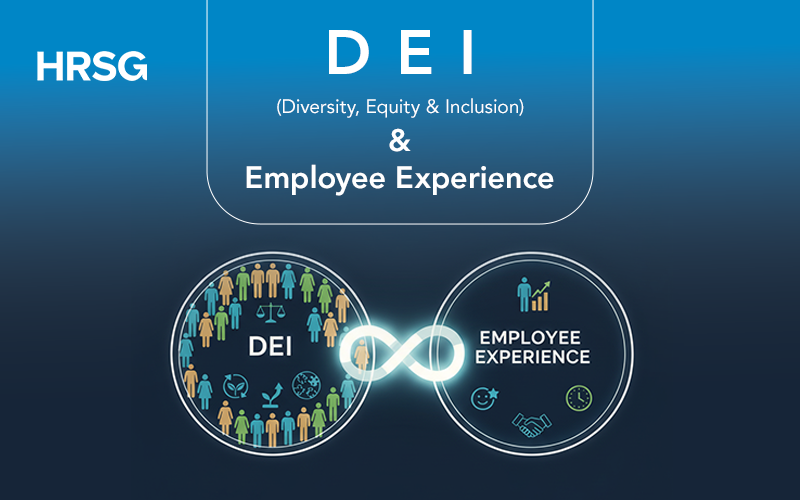
  • These professionals also oversee the Diversity, Equity, and Inclusion (DEI) efforts in your business operations.

What It is Like to Be a Payroll Expert?

Payroll is another key area that affects the overall operational efficiency of any business to a great extent. A payroll professional is indispensable for organizational stability and employee trust.

Quality payroll management practices have a strong alignment with HR strategy and employee experience of your company. These practices emphasize compliance and confidentiality along with continuous improvement.

Payroll professionals are not just mere administrators. Instead they serve as trusted advisors who empower you to ensure fairness as well as reliability for every employee.

Here is what it is like to work as a payroll professional with HRSG.

  • A study shows that around 63% of HR departments use automated systems for payroll management. Our professionals are skilled in system enhancements and automation.
  • These professionals provide accurate and timely payroll processing.
  • They ensure statutory compliance in every transaction.
  • They also have to calculate taxes and do regulatory reporting.
  • These professionals also need to work on payroll audits or ensure payroll compliance.
  • They also have to provide support to every employee for pay-related inquiries.
  • They also work on cross-functional projects with HR and finance departments.

What It is Like to Work in Consulting?

A consultant helps businesses solve complex financial and management issues. They also help with people’s challenges and design systems that support equity as well as growth in every area.

Consultants who work with HRSG manage client relationships or expectations. They also provide analytical insights and practical solutions to drive tangible results.

The collaboration of consultants within project teams paves the way for continuous learning. These professionals help organizations manage and value their employees or clients in a much better manner. 

Here is what you can expect when you work as a consultant.

  • You have to pinpoint current organizational and workforce challenges.
  • You also need to come up with efficient job architectures and compensation frameworks.
  • These professionals also carry out market pricing and pay equity analysis.
  • Consultants have to translate every bit of raw data into actionable insights.
  • They also find opportunities for better exposure to a wide range of industries and work on different leadership styles.

Conclusion

Careers in HR, payroll, or consulting aim to uncover avenues that guide how organizations support and reward their workforce. In these job roles with HRSG every employee is free to apply their expertise and expand their skills. This in turn creates meaningful outcomes for the organization as well as the clients.

Professionals at HRSG who work in HR, consulting and payroll combine their deep knowledge and analytical rigor to create a productive workplace for every employee.

Professionals who are curious and driven to improve HRSG offer exciting career opportunities and nonstop growth every single day.

Visit us at HRSG today to get the best HR, payroll, accounting, and facility management solutions for your businesses all over the world.


FAQs

What are some notable careers that HRSG offers?

HRSG gives exciting career opportunities to professionals in Human Resources, Payroll, and consulting. These opportunities are available both for early-career professionals as well as experienced specialists.

What skills are needed for people who work in HR, payroll, or consulting?

These professionals should have strong analytical or problem-solving abilities. They also have to be better communicators or collaborators. 

What is the workplace culture at HRSG?

HRSG takes pride in its collaborative and inclusive work environment. Every employee is free to give their input in core policies. They are also free to challenge assumptions and share ideas.

What is it like to work in HR, payroll, or consulting roles with HRSG?

These careers can be fast-paced and intellectually stimulating for professionals. Consultants or HR experts can work closely with clients to come up with solutions and provide data-driven insights.

Top 5 HR Technology Trends for UAE Companies (AI, Automation, Analytics)

Top 5 HR Technology Trends for UAE Companies (AI, Automation, Analytics) 1264 848 HRSG

HR automation in the UAE has moved from a back-office efficiency tool to a core business strategy. With Emiratisation compliance deadlines tightening, WPS payroll obligations carrying real financial penalties, and the competition for skilled talent intensifying, UAE companies can no longer rely on manual HR processes to keep up.

This article covers the five most significant HR technology trends defining how UAE businesses hire, manage, retain, and develop people in 2026 — and what each one means in the specific context of the UAE’s regulatory and talent environment.

1. Agentic AI for Talent Management

Hiring in the UAE is no longer about just posting a job and waiting for CVs. It is now driven by intelligent systems that act on their own.

Agentic AI is a new generation of artificial intelligence that does more than give suggestions. It takes action. All without a recruiter manually touching every step, it can:

  • Write job descriptions
  • Screen thousands of CVs
  • Run video interviews
  • Analyze candidate sentiment
  • Score cultural fit
  • Check nationality rules for Emiratization

So, HR teams can filter candidates by skills, experience, and nationality, which helps companies meet Emiratization targets while still hiring the best-fit talent. Companies using this type of AI are cutting their time-to-hire, which is huge in a market where good candidates disappear fast.

Furthermore, in Dubai, many organizations are also integrating GenAI tools with MOHRE systems. This allows HR teams to predict visa timelines, automate offer letters, and personalize onboarding for each employee.

Also, most employee queries are now handled by chatbots. Many HR questions, such as the ones about leave, salary, visas, or policies, never reach a human. This frees HR leaders to focus on strategy, culture, and workforce planning instead of email and paperwork. It also improves employee experience.

2. Comprehensive HR Automation

In the UAE, HR compliance is enforced with real financial penalties. Companies must follow WPS payroll rules, Emiratization quotas, digital contract laws, and visa tracking.

For small companies with 20–49 employees, automation is even more important. If they miss Emiratization targets, they can face fines of up to AED 108,000 per year.
For large companies, it is worse. They can be charged AED 8,000 per month for every unfilled Emirati role.

Doing this manually is risky and slow. This is why full-scale HR automation is becoming common across the country. AI-based platforms automate almost the entire employee lifecycle. So, payroll, attendance, leave, contracts, onboarding, and even exit formalities run on connected systems.

Moreover, digital signatures under the UAE Electronic Transactions and Trust Services Law mean employees can sign contracts, NDAs, and policy documents online with full legal validity. No printing. HR automation systems track all of this in real time. They send alerts and hence prevent violations.

Robotic Process Automation (RPA) is also being used for repetitive tasks like chasing approvals, updating records, and syncing systems. This creates “stagility” (stability + agility).

Big infrastructure projects, government-linked firms, and fast-scaling startups all rely on this balance. And technology is what makes it possible.

For UAE companies, the business case for HR automation is sharpened by compliance risk. Manual payroll processing increases the likelihood of WPS errors, which can trigger regulatory action. Manual Emiratisation tracking leaves companies exposed to fines of AED 8,000 per month per unfilled Emirati role for larger employers. Automated systems remove this risk by flagging gaps in real time, generating compliance reports, and maintaining audit-ready records without HR team intervention.

HRSG’s Octofy platform was built specifically for this environment — automating payroll, attendance, leave management, and Emiratisation tracking in a single system designed for UAE labour law compliance. Learn more about Octofy here.

3. Predictive People Analytics

Most HR problems do not appear suddenly. Building up quietly, attrition, burnout, disengagement, and skill gaps all leave data signals before they become serious issues. Predictive people analytics uses this data to forecast what will happen next.

To predict who might leave, who is struggling, and which skills will soon be missing, UAE companies now analyze:

engagement surveys
overtime patterns
performance trends
external job market data

This matters a lot. Mental health issues alone are estimated to cost UAE companies 3.9 billion AED per year in lost productivity. But, with predictive analytics, HR teams can intervene early.
They can offer flexible schedules. They can also move people to better-fit roles or recommend training. Platforms like Darwinbox go a step further. They track hybrid-work sentiment, manager feedback, and career progression in real time.

4. Skills-Based Hiring Platforms

After the Great Resignation, companies realized that replacing talent is harder than growing it. Skills platforms help them do that. So, UAE companies are shifting to skills-based hiring, where AI-powered ATS systems verify whether a candidate can actually do the job. Python skills, digital marketing ability, data analysis, cloud tools, and industry software now matter more than old certificates.

Some platforms use AI to generate interview questions based on required skills and match candidates using detailed skill filters. This speeds up hiring. It also increases diversity.

With Green Visas and flexible work permits, companies can hire freelancers, remote workers, and specialists much more easily. Skills-based platforms make this practical.

This also protects companies from fake Emiratization, which is illegal quota-filling without real work. AI systems monitor role activity, output, and engagement to ensure compliance is real, not just on paper. Learning and development has also gone digital. Gamified platforms now fund and track upskilling.

5. Hyper-Personalized Employee Experiences

Hyper-personalized employee experience (EX) uses AI to recommend benefits, learning paths, wellness support, and career moves based on individual data. What works for one person does not work for another.

In the UAE, 98% of companies are exploring or using hybrid work models. AI-based portals allow employees to track goals, give feedback, request support, and see real-time updates from anywhere. Moreover, mental health support, compensatory leaves, wellness check-ins, and emotional intelligence training are now built into HR platforms.

The gig economy is also being integrated. Just-in-time freelancers, compliant with UAE visa rules, are managed inside HR systems just like full-time staff. This keeps companies lean. And it keeps talent happy.

FAQs

What is HR automation in the UAE?
HR automation in the UAE refers to using software to handle repetitive HR tasks — payroll processing, attendance tracking, leave management, contract generation, and compliance reporting — without manual intervention. In the UAE context, this includes integration with WPS (Wage Protection System) and MOHRE systems to ensure regulatory compliance.

What are the benefits of HR automation for UAE companies?
The main benefits are reduced compliance risk (especially for WPS and Emiratisation obligations), faster payroll processing, fewer administrative errors, and freeing HR teams to focus on strategic work like talent development and workforce planning rather than paperwork.

Which HR tasks can be automated in the UAE?
Payroll and WPS submission, attendance and leave management, employee onboarding and offboarding, contract generation with e-signatures under UAE Electronic Transactions Law, Emiratisation quota tracking, and routine employee queries via HR chatbots can all be automated.

What HR technology do UAE companies use in 2026?
UAE companies are increasingly using AI-powered HRMS platforms, applicant tracking systems with Emiratisation filters, predictive people analytics tools, and skills-based hiring platforms. Local platforms built for UAE compliance are preferred over global tools that require significant customisation.

How does HR automation help with Emiratisation compliance?
HR automation systems track Emirati headcount in real time against NAFIS targets, alert HR when quota thresholds are at risk, and generate compliance documentation for audits. This significantly reduces the risk of penalties, which can reach AED 8,000 per month per unfilled role for larger companies.

Ultimate Guide to Payroll Compliance in the UAE (2026 Edition)

Ultimate Guide to Payroll Compliance in the UAE (2026 Edition) 1536 1024 HRSG

One of the reasons why employers and employees are keen on working in the UAE is its legal and regulatory system. Regarded as one of the safest and secured places to work globally, the UAE boasts diverse businesses and a cosmopolitan workforce. 

While the Ministry of Human Resources and Emiratisation (MOHRE) keeps a strict check on all policies, the UAE also makes use of real-time tracking and data and audit checks to ensure everyone gets their due in time. Consequently, even minor oversight or inaccuracy can result in:

  • Fines and legal penalties 
  • Suspension of work permits
  • Delays in visa processing
  • Reputational damage with regulators and employees

So, how can you stay compliant? By understanding the different aspects of payroll, regulation, and recent changes made to them. Our 2026 edition of the UAE payroll compliance guide covers everything you need to know. So read till the end. 

What’s Coming Up Next…

  • Who regulates payroll compliance in the UAE
  • The Wage Protection System: Recent changes 
  • WPS compliance rules for employers
  • Key payroll requirements as per the UAE Labour Law
  • End-of-service benefits [ESOBs] and saving schemes 
  • Social security for UAE and GCC nationals 
  • Health insurance 
  • Emiratisation and payroll compliance

At a Glance

Area What Employers Must Do Risk if Missed
Wage Payments Pay salaries monthly via WPS within 15 days Fines and work permit bans
Contracts MOHRE-registered 

fixed-term contracts

Legal disputes, penalties
WPS Real-time salary reporting & verification Up to AED 5,000 per violation
EOSB/DEWS Accurate gratuity or savings contributions Underfunding liabilities
Emiratisation Meet national hiring quotas AED 6,000–9,000 monthly per shortfall (progressive, up to AED 108,000 annually)

Who Regulates Payroll Compliance in the UAE?

Different authorities take care of different aspects of payroll in the UAE. Below is a quick overview of the same:

Ministry of Human Resources and Emiratisation (MOHRE)

MOHRE is the leading authority that looks after private-sector jobs in the UAE. It oversees important aspects such as contracts, wages, working hours, gratuity benefits, and the mandatory use of the Wage Protection System. 

Think of it like an intermediary between the employer and the employee. It assures that the labor practices are fair and align with the country’s laws. Additionally, the MOHRE is responsible for the Emiratisation program. It works hand in hand with companies for integrating UAE nationals in the private sector. Another area that MOHRE looks into is dispute resolution. It mediates and arbitrates disputes between employers and employees for fair settlements. 

Federal Tax Authority (FTA)

The FTA regulates two aspects of payroll-related processing:

  • 5% VAT on employee benefits. For example, housing and transportation.
  • Corporate tax (linked to payroll costs)

General Pension and Social Security Authority (GPSSA)

GPSSA manages pensions for UAE and GCC nationals, helping them build a strong retirement fund. You’ll have to register eligible employees with GPSSA and make monthly contributions.

As of 2025, the total contribution rate is 20% for private sector employees. It is determined by the employee’s salary and is calculated on the pensionable wage. Below is a breakdown of the contribution:

Entity  Percentage [out of 20]
Employer  12.5
Employee 5
Government  2.5


If the employee has joined after October 2023, the updated percentages are as follows:

Entity  Percentage
Employer  15
Employee 11
Government  2.5 (if salary is less than AED 20,000)

The Wage Protection System

Introduced in 2009, the Wage Protection System is mandatory for all private companies. Under the WPS, employers have to pay salaries through approved banks or exchange houses. MOHRE monitors these payments electronically to ensure employees are paid fully and on time.

What Changed with the Enhanced WPS?

The WPS covers more than 99% of employees working in the private sector with wages exceeding AED 35 billion monthly. The MOHRE has developed a new fully digital system along with the Central Bank of the UAE, Al Etihad Payments, and a group of financial institutions. It is a result of the partnership between the Ministry and e& Group, Lulu Exchange, GCC Exchange, and others to secure rights and ensure transparency. 

Key improvements include:

  • Accelerated registration and verification process
  • Ability to retrieve data directly from MOHRE
  • Real-time salary verification
  • Automated wage data processing
  • High-accuracy monitoring of delays or violations

As a result, payroll errors are detected faster. Also, compliance expectations are higher.

WPS Compliance Requirements for Employers

If you’re an employer, you need to be mindful of the following compliances:

  • Registration with MOHRE or the relevant free zone authority
  • A corporate bank account supported in the WPS
  • Preparation and submission of Salary Information File (SIF)
  • Electronic payment of salaries within 15 days of the due date. You must avoid cash or cheque payments. 
  • Immediately resolve all rejected or delayed transactions. 

Other compliances:

  • Register all new employees in WPS within 60 days of contract signing
  • You cannot deduct more than 10% of your employee’s salary. It is only allowed if it is specified by law.

Penalties for WPS Non-Compliance

In case you fail to comply with the WPS, you may be fined or penalized with the following:

  • WPS blocking and suspension: If you miss payment deadlines, your new work permits can be blocked after 17 days past the due date. Moreover, all companies under the same ownership can face the consequences. 
  • Fines: You’ll have to pay AED 1,000 for each employee for false wage data. Other penalties apply for manipulating working hours. 
  • Labour ban: If you’re a serious offender, you may be banned from onboarding staff and face legal action.

Key Payroll Requirements Under UAE Labour Law

Here are some important payroll requirements under the UAE labour law:

Employment Contracts

All employees must be issued renewable, fixed-term contracts for a maximum of 3 years. These must be registered with MOHRE within 14 days of joining. Contracts must clearly state the following aspects of employment:

  • Basic salary
  • Allowances
  • Payment frequency
  • Deductions
  • Payment method
  • Net pay

Payroll records, including contracts and proof of payment, must be kept for at least five years. Note that if the salary is not paid within 15 days after the due date, the employer is considered late.

Salary Deductions

Deductions are allowed only in limited cases, such as:

  • Unpaid absences
  • Approved salary advances
  • Legal penalties under labour law

Working Hours, Overtime, and Pay

Standard working hours are 8 hours per day or 48 hours per week. But during Ramadan, Muslim employees work 6 hours per day or 36 hours per week. If your employee is working overtime beyond the legally allowed limits, you must pay them as per the labour law. 

There is no fixed minimum salary in the UAE. But still, the salary should be enough for basic living needs. And it should be the same as mentioned in the job contract.

End-of-Service Benefits (EOSB) and Savings Schemes

Gratuity (Mainland & Non-DIFC/ADGM)

Employers must accrue gratuity as follows:

  • 21 days’ basic salary per year for the first 5 years
  • 30 days’ basic salary per year after that
  • Maximum cap of 2 years’ total wage

DIFC – DEWS Scheme

For DIFC employees, employers must contribute:

  • 5.83% of basic salary (service under 5 years)
  • 8.33% (service over 5 years)

ADGM

ADGM employers must meet gratuity obligations. They must also prepare for the qualifying savings scheme starting from April 2025. Regular reconciliation helps avoid underfunding issues.

Mandatory Health Insurance

Health insurance is employer-funded and mandatory. Valid coverage is required for visa issuance and renewal. It is best to stay on top of insurance regulations as they update across the Emirates. 

Emiratisation and Payroll Compliance

If a company has 50 or more employees, it has to follow Emiratisation rules. This means the company needs to hire Emirati people for skilled jobs. If not:

  • Employers face AED 9,000 per month per missing role
  • Penalties increase each year

Payroll systems must track nationality, job roles, and salaries accurately to support reporting.

Staying Compliant With the UAE Laws

The UAE is constantly updating its laws to benefit all stakeholders equally. In fact, its policies, rules, and regulations make it one of the most structured and safe places to work. However, a small misstep, ignorance, or non-compliance with the laws can result in hefty penalties. 

HRSG’s Octofy® is a smart HR and Payroll solution with advanced modules. It is designed to simplify the workforce and automate important functions for businesses of all sizes. Octofy takes care of everything you need, from attendance management and HR payroll automation to performance management. 

Frequently Asked Questions

How does payroll work in the UAE?

Payroll runs through WPS. Employers collect data, calculate salaries, apply deductions, submit the SIF, and issue payslips. All steps must follow the labour law.

How do you ensure payroll compliance?

Follow MOHRE rules and pay through WPS. It is best to keep accurate records and run regular checks to prevent fines, licence issues, and legal action.

What is the HR policy in the UAE?

HR policies must follow Federal Decree-Law No. 33 of 2021. They should talk about working hours, leaves, how termination works, safety at work and discipline. Overall, the rules should be fair and clear. They should also allow some flexibility where possible.

What are the basic salary rules?

Although there is no minimum wage, the pay should be enough for basic needs. It should also match what is written in the contract. Most importantly, it has to be paid on time.

Hybrid Work Models & Freelancer & Gig Economy Growth

Hybrid Work Models & Freelancer & Gig Economy Growth

Hybrid Work Models & Freelancer & Gig Economy Growth 800 500 HRSG

The world is moving away from the traditional 9-5 work model, and the pace at which it is happening is increasing by the day. Millions of professionals worldwide are increasingly drawn to hybrid work models, freelancing, and the gig economy because of the autonomy and flexibility they offer — without significantly affecting income levels.

The modern workplace is no longer confined to four walls or a cubicle. Instead, many professionals are looking for hybrid, freelance, or gig-based career opportunities that are characterized by greater productivity, cost-effectiveness, and operational efficiency both for the professionals and employers.

This blog delves into the rise of Hybrid, freelance, and gig economy work models to help you understand what makes them a better option in the current business landscape. So, keep on reading till the end.

  • What is the Hybrid Work Model?
  • What is Freelance Work?
  • What is the Gig Economy?
  • Convergence of The Hybrid, Freelance, and Gig Work Models

What is the Hybrid Work Model?

A hybrid work model typically combines traditional in-office employees with remote or freelance professionals. This model is a blend of remote and in-office work, leading to greater flexibility for the employees and cost savings for the organizations.

This model allows businesses to ensure their core workforce takes care of the key tasks onsite, and they also get access to specialized skills on demand without any administrative burden.

Another approach involves splitting employees’ time between remote and on-site work. In this case, employees are either allowed to choose their in-office and remote days or their weeks are split by the management based on workloads. 

Estimates suggest that about 70% of business executives expect to use temporary freelance workers in their hybrid operations in the coming years.

Why It Works?

Here is what makes this model stand out.

  • This model gives employees the flexibility to divide their workdays between office and home, which enhances employee experience and productivity.
  • Businesses can access a greater talent pool in this case, who can handle remote work for them.
  • It helps organizations save significantly on office space, utilities, and employee benefits.
  • Employees enjoy a better work-life balance in hybrid work models.

Growth Statistics

The real growth of this working model began during COVID. Currently, over 75% of global businesses offer hybrid work to their employees in one form or another, says a report by Gartner.

Another survey showed that more than 71% of professionals prefer organizations that offer a hybrid work setup. That’s why industry giants like Google, Apple, and Microsoft are operating under or transitioning to hybrid work models.

What is Freelance Work?

This is a highly flexible work model where, instead of going for traditional recruitment, professionals work independently for a single client or multiple clients at a time.

Freelancers are self-employed professionals who work with their clients on a project basis and are usually paid once they deliver the project. In this model, professionals choose their own schedules, work location, rates, and working equipment.

In recent years, freelancers have dominated several sectors, including IT services, marketing, accounting, writing, and technical services, to name just a few. Many freelancers rely on platforms like Fiverr, Upwork, and Toptal to connect with potential clients and provide their specialized services.

Why It Works?

Here is what makes freelancing an attractive working model.

  • It gives professionals full autonomy and work flexibility.
  • Many businesses that use a hybrid working model prefer outsourcing their key tasks to freelancers, which leads to more career opportunities.
  • Freelance work can be done alongside traditional jobs, which gives professionals an opportunity to earn more and diversify their income.
  • Freelancers are paid directly by clients, typically on a project or milestone basis.
  • Freelancers manage every aspect of their work from client hunting to retention and from sales to invoicing themselves. In other words, they are their own bosses.

Growth Statistics

According to some estimates, more than 46% of Gen Z professionals prefer freelance work. The global freelance market is projected to reach a staggering $500 billion by the end of 2027, which goes to show how much growth potential this work model possesses.

What is the Gig Economy?

This is another growing work model that is known for flexible work schedules, low-entry barriers, and autonomy. In this model, professionals or independent contractors provide short-term services to individuals or organizations and are paid per task, project, or gig.

Unlike freelancing, gig economy jobs are short-term and task-based. These jobs are often facilitated by digital platforms. Some popular gig-based platforms are Uber, Lyft, DoorDash, Rover, and Airbnb.

In this model, professionals do not need a lot of investment to start or find work. Most of the gig jobs are mobile app-based, which lowers entry barriers. Many professionals use gig jobs as a backup income stream to minimize financial risks and economic uncertainty.          

Why It Works?

Here is what makes this model a success.

  • It gives you full control over your working hours.
  • It gives people with all skill levels an opportunity to enter the job market.
  • Gig economy jobs are project-specific, short-term, and driven by on-demand digital platforms.
  • It allows professionals to be paid quickly following the completion of the service or project, which leads to financial stability. 

Growth Statistics

The global gig economy is currently valued at over $1.8 trillion. In the USA alone, more than 35% of the workforce is involved in gig work, either part-time or full-time. Another survey by Forbes has shown that more than 52% of Gen Z prefer freelance or gig work over traditional working models.

Conclusion

Hybrid, freelance, and gig work models are rapidly becoming central to economies in both developed and developing nations. Unlike traditional work models, these offer professionals greater autonomy and more career opportunities.

For employers, these work models lead to reduced operational costs and administrative burden. Adaptability and continuous learning are becoming key requisites for businesses and individuals who wish to ensure long-term success at a time when the global workforce is leaning more towards hybrid, gig, and freelance work.

This is the only way to overcome challenges and uncover new opportunities arising from this modern shift in the nature of work.    

Visit HRSG today to explore exciting career opportunities and access top-tier HR, recruitment, accounting, and integrated facility management services designed to take your business to the next level.

DEI (Diversity, Equity & Inclusion) & Employee Experience

DEI (Diversity, Equity & Inclusion) & Employee Experience

DEI (Diversity, Equity & Inclusion) & Employee Experience 800 500 HRSG

DEI, which stands for diversity, equity, and inclusion, is a trending topic in modern businesses and workplaces. The initiatives that fall under the umbrella of DEI have proven quite effective in creating a better employee experience and building a positive company culture.

A report by McKinsey has revealed that industries that practice DEI implementation are 25% more likely to have above-average profitability. Another LinkedIn survey has shown that more than 69% of human resources professionals and recruiters believe that their organization is committed to diverse hiring practices.

Businesses that celebrate diversity, practice inclusion, and prioritize equity are able to create a better environment for employees, and that translates to greater retention, productivity, and profits.

This blog highlights core principles of DEI and explores how it can create a better experience for your workforce. So, keep on reading till the end.

  • DEI (Diversity, Equity & Inclusion): Definitions and Core Principles
  • How DEI Impacts Employee Experience?
  • Creates a Sense of Belonging
  • Enhanced Collaboration
  • Employee Satisfaction
  • Better Employee Engagement
  • Greater Employee Retention
  • Employee Motivation and Morale
  • Effective Tips for Implementing DEI In Your Business

DEI (Diversity, Equity & Inclusion): Definitions and Core Principles

DEI defines a specific set of programs or strategies that are employed in a business to create a company culture that is characterized by employee diversity, equity, and inclusion.

DEI provides a comprehensive framework for creating a workspace that facilitates and encourages full participation of all employees, especially those from underrepresented groups.

In short, DEI promotes the representation and participation of every employee in the workplace irrespective of their race, ethnicity, age, religion, disabilities, gender, or sexual orientation.

The following are the main concepts involved in DEI.       

  • Diversity

The term diversity refers to the presence and participation of professionals from varying backgrounds who have been traditionally underrepresented despite having the skills in your workplace.

An organization is considered diverse if its workforce consists of employees having different racial, ethnic, religious, sexual, age, and physical ability backgrounds.

Businesses can promote workplace diversity by offering career opportunities to professionals from diverse and preferably marginalized groups. They can also try to create a welcoming, respectful, and healthy work environment where every employee respects the personal values of others.  

  • Equity

Equity in the workplace means ensuring every employee receives fair treatment, access to equal growth opportunities, and equal salaries and benefits. It also includes identifying certain barriers that lead to less participation of certain groups and eliminating them.

One key thing to remember is not to confuse the term equity with equality. Equality means the access to the same opportunities and resources for all. On the other hand, equity means giving each person access to opportunities and facilities in proportion to their needs to get equal results.

Equity should be offered by taking diversity into account, which levels the playing field by giving each employee the support they need.     

  • Inclusion

Inclusion is all about creating an environment where every employee feels heard, respected, and valued. Inclusion creates a sense of belonging and gives each employee dignity and value.

An inclusive work environment is where employees feel welcomed and encouraged to participate and contribute without fearing judgment from colleagues or superiors.

Inclusion is also about providing access to equal opportunities and resources to every employee, irrespective of their background, to make sure they feel fully integrated into your company’s culture and operations.

How DEI Impacts Employee Experience?

A robust DEI strategy can go a long way in creating a more harmonious, fair, and collaborative workplace that ensures the best experience for every employee, no matter their rank, expertise, or duties.

Here are several ways DEI can positively impact the overall employee experience:

  • Creates a Sense of Belonging

DEI initiatives and HR services promote acceptance and representation of every marginalized member of society in positions of leadership, management, and in general workforce. This inclusivity gives every employee a sense of belonging. 

Additionally, DEI policies create psychological safety by providing employees a space to express their ideas, concerns, and feedback. This makes them realize that their voice matters and that further fosters a feeling of belonging.

Other things like recognition of individual contribution, providing professional mentorship and support, and creating opportunities for open communication are also a part of DEI, which makes every employee feel like they really matter to your business.

  • Enhanced Collaboration

DEI is really helpful in creating a sense of camaraderie among your teams, which can improve collaboration. Employees who work in diverse and inclusive environments have a shared sense of purpose and responsibility. These employees have deeper connections with their peers and superiors, which makes collaboration much easier and very fruitful.

DEI eliminates cultural, ethnic, racial, and religious roadblocks to collaboration, enhancing employee experience and positively impacting productivity.     

  • Employee Satisfaction

The level of satisfaction that an employee feels is directly linked to their overall experience in the workplace. In a DEI-inspired workplace, every employee feels more confident and seen.

Employees, in this case, feel like their presence is accepted and their voice is always heard. If a workplace has employees from diverse backgrounds who feel like they are respected and valued for who they are, it makes them feel more at ease.

The principles of DEI promote fair treatment for all, open communication, and equal representation of all groups in key decision-making, which goes a long way in creating a workplace where every employee experiences a greater sense of fulfillment and satisfaction.

  • Better Employee Engagement

Employees who believe that their workplace celebrates diversity, promotes equity, and ensures inclusion tend to feel more engaged. These employees work harder, collaborate better, and stay longer with an organization.

DEI fosters fairness in opportunities, an experience of belonging, and loyalty for the organization. DEI initiatives like mentorship, unbiased feedback, and open communication make every employee feel more invested and involved, which reflects positively on overall engagement and productivity.

  • Greater Employee Retention

Incorporating DEI policies in recruitment, onboarding, and day-to-day business operations makes employees feel more satisfied, engaged, and seen. When employees feel like their individuality is celebrated, efforts are recognized, and their voice is always heard, they tend to stay longer with an organization.

DEI aims to provide psychological safety to every employee, which fosters loyalty. Without this approach, you run the risk of creating a toxic and intolerant workplace, leading to greater employee turnover rates.

  • Employee Motivation and Morale

DEI initiatives aim to enhance workplace adaptability, cultural sensitivity, and collaboration. When employee feel appreciated, valued, and recognized for their efforts and uniqueness, they try to go above and beyond to complete their assigned projects.

A satisfied employee is a motivated employee, and that is what DEI policies help businesses accomplish. With inclusivity, diversity, and equity, employees are able to work in a more collaborative environment and develop a positive attitude. This builds up morale and enhances motivation, making the workplace more efficient.


Effective Tips for Implementing DEI In Your Business

Implementing DEI in your workplace isn’t a one-time thing. Instead, it is an ongoing process that requires your utmost attention and dedication. The following are a few things you can do to practice DEI in your business.

  • Learn about the history, background, context, and the need for DEI, and educate your workforce about it.
  • Look at your current employee data and DEI metrics to determine the demographics of your organization.
  • Add DEI policies to your talent pipelines and hiring processes.
  • Prioritize hiring for cultural contribution as it brings new and diverse thought processes, ideas, and perspectives to the table.
  • Implement onboarding programs to make sure your team is aware of the cultural, religious, and social rules to follow to make the new DEI employee feel appreciated.
  • Promote equitable salaries for all employees who are adding the same value to the company, irrespective of their age, gender, color, etc.
  • Institute programs to train underrepresented groups to ensure their personal and professional growth.
  • Celebrate cultural and religious diversity by recognizing special days and occasions.
  • Foster open communication between the employees and the management.
  • Consider hiring a DEI leader or having a DEI committee for creating and better managing a diverse background workplace.      


Conclusion

DEI and employee experience go hand in hand. An employee’s experience is not just about the work they are given and the salary they get for it. Your workforce also needs to feel appreciated, seen, and respected, and this is what DEI initiatives are all about.

By embedding the principles of DEI in your operations, you can ensure greater employee retention, satisfaction, collaboration, and productivity. This creates a more motivated and loyal workforce that is willing to go above and beyond when it comes to carrying out their day-to-day and long-term tasks.

DEI can thus create a positive company culture that is equally beneficial for the employees, employers, and every other stakeholder involved.    

Visit us at HRSG today to get the best HR services to ensure maximum DEI and the best employee experience in your businesses worldwide.

Image Enquiry